When Generative AI first burst onto the scene, many people thought of it as a fun toy for generating funny pictures of cats or writing poems in the style of Shakespeare. But the "novelty" phase is officially over.
Today, Generative AI is a multi-billion-dollar enterprise technology that is fundamentally rewiring how the world works. It is saving thousands of hours of tedious manual labor, unlocking unprecedented human creativity, and solving problems that were previously thought impossible to automate.
Let's step out of the theory and look at how this technology is actively being used right now to transform major industries. By the end of this, you'll see exactly why every company on earth is racing to adopt it!
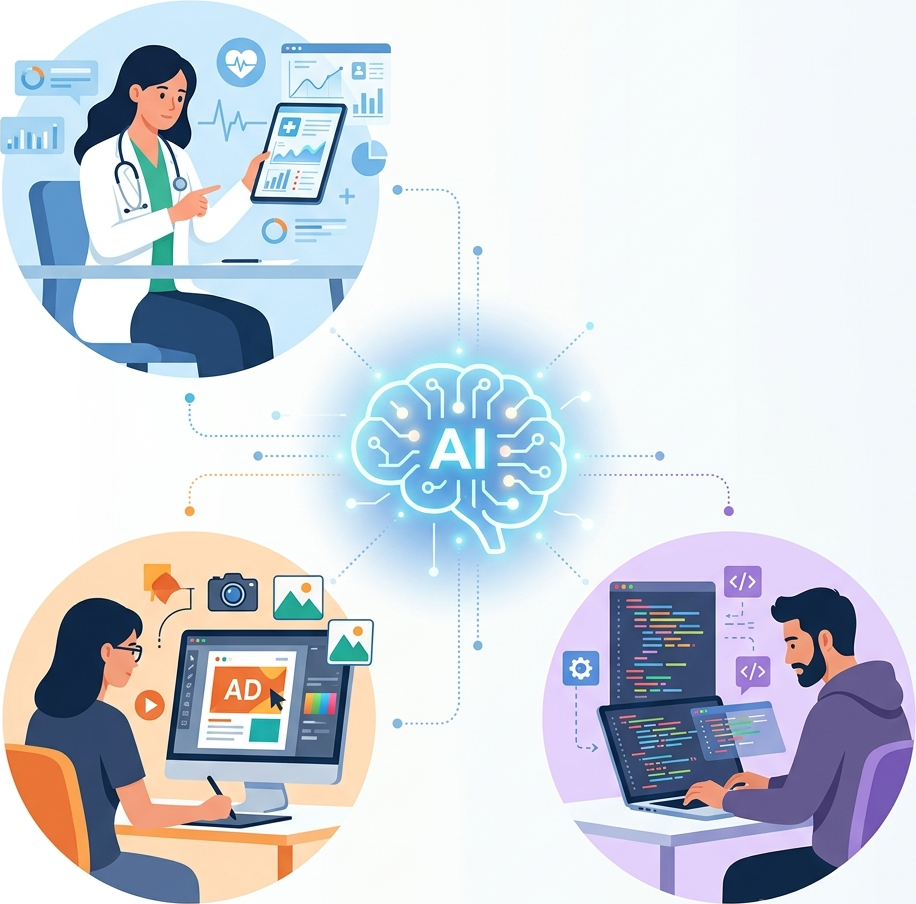
1. Healthcare & Medicine 🩺
The medical field is historically slow to adopt cutting-edge tech, but Generative AI is too powerful to ignore. The goal isn't to replace doctors—it’s to give doctors their time back so they can actually focus on saving lives.
Medical Scribes & Note-Taking
Did you know the average doctor spends nearly half of their workday just typing out patient notes? It is the leading cause of physician burnout.
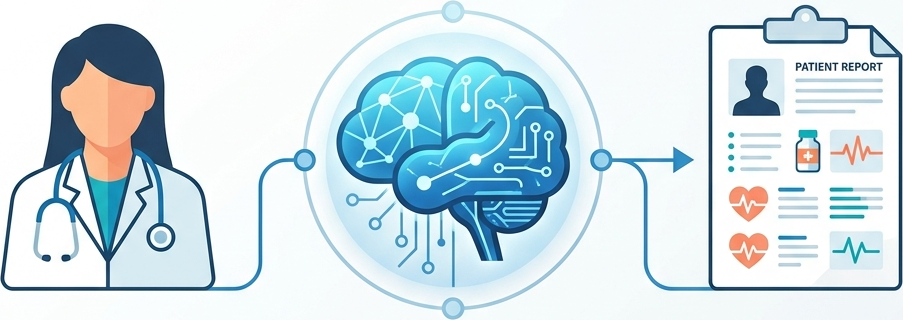
Now, specialized AI tools sit securely in the exam room, listening to the conversation. In real-time, the AI filters out the small talk, understands complex medical jargon, and instantly generates a perfectly structured clinical report that goes straight into the patient's chart. What used to take two hours of typing now happens instantly.
Drug Discovery
Historically, discovering a new drug takes 10 to 15 years and costs billions. Scientists must manually test millions of chemical combinations in physical labs.
Today, Generative AI is "generating" new molecular structures in a computer simulation. It can predict how millions of different molecules will interact with a specific disease, narrowing down the best candidates in months rather than decades.
🌍 Real-World Impact
In 2023, the very first drug fully designed by Generative AI entered Phase II clinical trials for a chronic lung disease, shattering the traditional timeline for pharmaceutical development.
2. Software Engineering 💻
Writing code is incredibly complex. Even senior developers spend hours hunting down missing semicolons, reading boring documentation, or writing repetitive "boilerplate" code.
The AI "Pair Programmer"
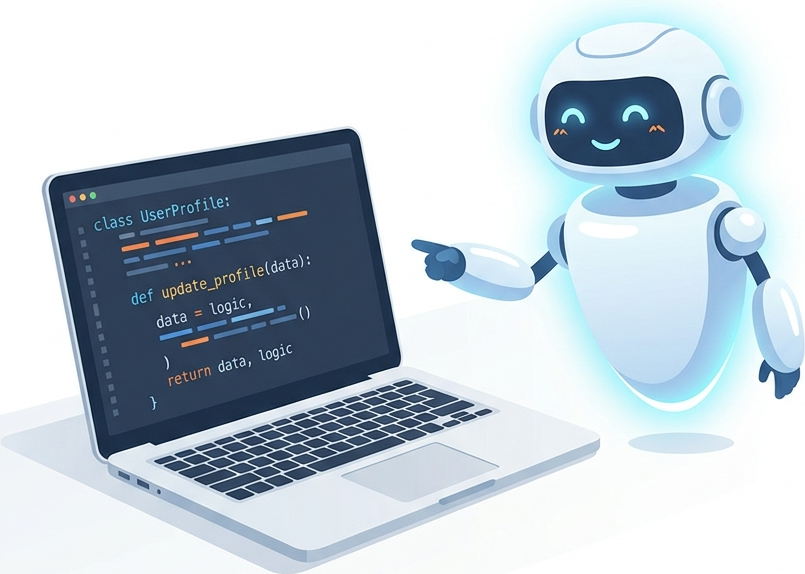
Generative AI models trained on billions of lines of code have changed programming forever. Tools like GitHub Copilot or Cursor sit directly inside the programmer's editor.
As the developer types, the AI acts like a mind-reading autocomplete for complex logic. Stuck on a bug? You can highlight the broken code and ask the AI in plain English: "Why is the checkout button crashing?" The AI instantly scans the file, identifies the logical error, explains it, and writes the correct code for you.
🌍 Real-World Impact
Studies show that developers using AI coding assistants complete tasks up to 55% faster, allowing them to focus on designing brilliant architectures rather than typing out repetitive syntax.
3. Marketing, Design & Copywriting 📈
Marketing teams are under relentless pressure to constantly produce fresh content: daily blogs, social media posts, email newsletters, and highly targeted ad graphics.
Hyper-Personalized Content Generation
Instead of writing one generic email for 10,000 customers, marketers use Large Language Models (LLMs) to generate 10,000 uniquely personalized emails based on each user's exact purchase history and preferences.
Need a new ad graphic for a winter coat? No need to hire a photographer and rent a snowy cabin. A marketer can just ask an Image Generator (like Midjourney): "A high-fashion photograph of a model wearing a bright red winter jacket in a snowy forest at golden hour." The image is generated in seconds, royalty-free, and ready for Facebook.
🌍 Real-World Impact
E-commerce giants are using GenAI to instantly translate and localize their massive product catalogs into dozens of languages, with the AI automatically adjusting the tone for specific cultural nuances.
4. Customer Service & Support 🎧
We all despise dealing with robotic phone menus ("Press 1 for Sales...") or rigid website chatbots that just point you to a FAQ page when you have a real problem.
Intelligent Agents
Generative AI is obliterating old chatbots and replacing them with conversational "Intelligent Agents." Because these models deeply understand human language, you can explain your problem naturally.
For example, you can type: "Hey, my flight was delayed due to the snowstorm and I missed my connection in Chicago. I need to get rebooked ASAP."
The AI understands the context, securely queries the airline's database, identifies your ticket, finds the next available flight, and processes the change—all in five seconds, available 24/7, without ever losing its patience.
📌 Deep Dive: Understanding This Concept
As Generative AI systems become more complex, mastering the underlying principles of This Concept is essential for developers. Proper implementation in this area ensures that your AI applications remain scalable, performant, and secure when deployed to production environments.
Quick Knowledge Check
Test what you just learned
Question 1 of 2
How are software developers primarily using Generative AI today?
Question 2 of 2
In the Healthcare field, what is a massive time-saver that AI is currently helping doctors with on a daily basis?
Loading results...