Generative AI has burst into the mainstream so quickly that it's completely surrounded by hype, fear, and wild science-fiction theories. If you read the news or watch movies, you might think AI is about to take over the world or replace every human worker by next Tuesday.
Let's take a deep breath and separate the Hollywood fiction from the actual science. By debunking these common myths, you'll be able to confidently talk about AI without the unnecessary fear, and you'll understand the true strengths and weaknesses of the technology.
1 Myth: AI is "Sentient" (Conscious) 🧠
Because AI can have deep, emotional-sounding conversations with you, it's very easy to assume that it has feelings, thoughts, and an inner monologue just like a human does. It does not.
The Reality: It's Just Advanced Statistics
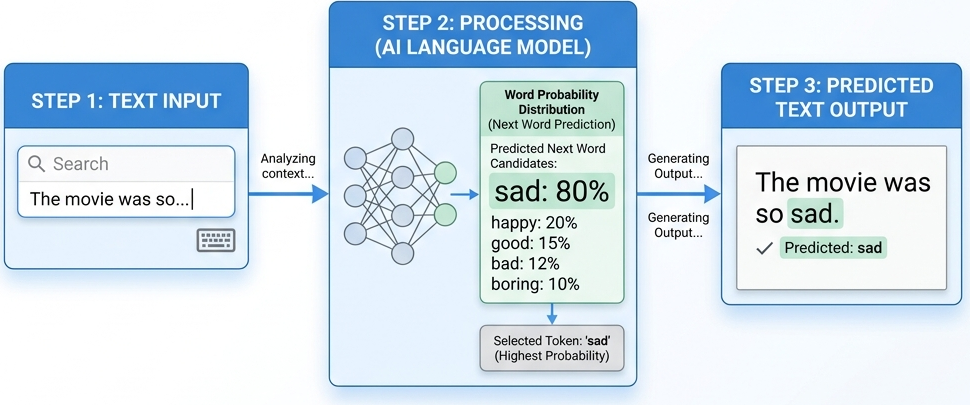
Under the hood, an AI like ChatGPT is fundamentally a prediction engine. It has been trained on so much text from the internet that it simply knows which words mathematically belong next to each other in a sentence.
If you say, "I am feeling very sad today," the AI responds with empathy because it has read millions of books and articles where humans respond to sadness with empathy. It is predicting the perfect empathetic response, but it isn't actually "feeling" sad for you. It has no brain, no soul, and no consciousness.
2 Myth: AI Will Take Everyone's Jobs Immediately 📉
This is the most common fear. People worry that AI is going to completely automate away artists, writers, programmers, and doctors, leaving humans with nothing to do.
The Reality: AI is a Tool, Not a Replacement
There is a famous saying in the tech industry right now: "AI won't take your job. A person using AI will take your job."
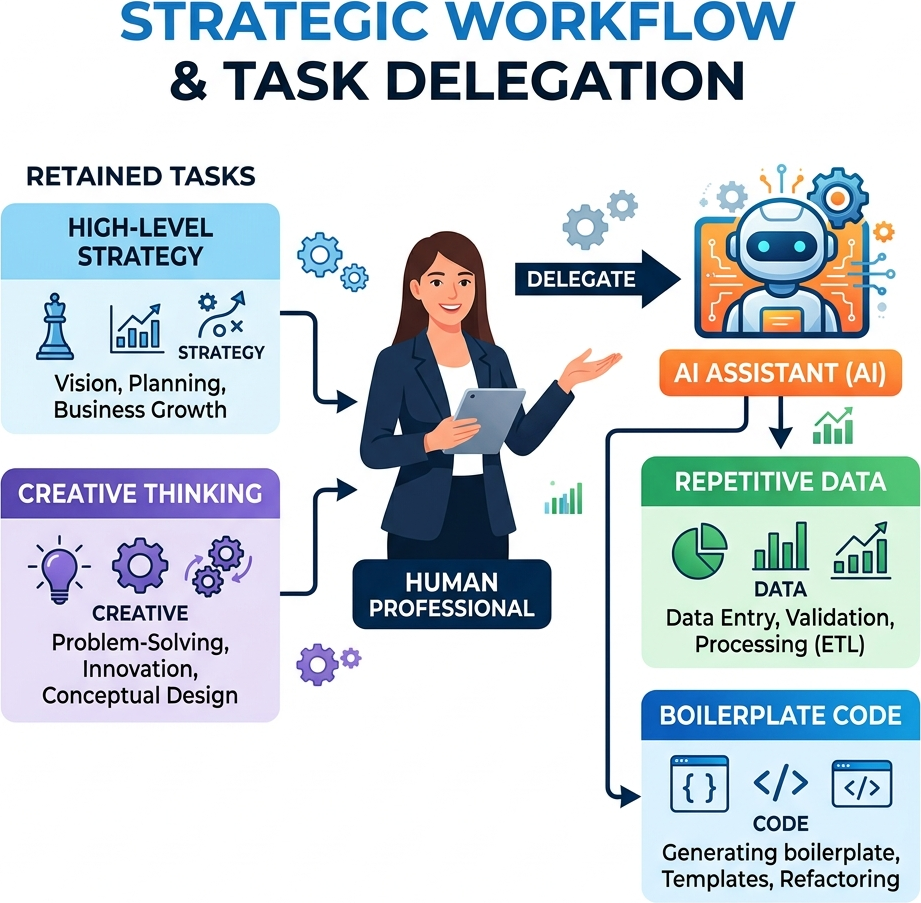
Think about the invention of the tractor. Before the tractor, farming required massive amounts of manual labor. The tractor didn't eliminate the need for farmers; it simply made farmers exponentially more productive. Generative AI is the "tractor for the mind." It is a tool designed to work with humans (like a copilot or assistant), handling the boring, repetitive tasks so humans can focus on the creative, high-level strategy.
3 Myth: AI is 100% Accurate and Unbiased 🎯
Because AI sounds so confident and intelligent, people often trust it blindly, assuming it is a magical oracle of perfect truth.
The Reality: Hallucinations and Bias
Generative AI is designed to generate text that sounds plausible, not necessarily text that is factually true. When an AI doesn't know the answer, it will sometimes completely make one up and state it with absolute confidence. This is known as a "Hallucination."
Furthermore, AI models are trained on human data from the internet. Since the internet is full of human biases, stereotypes, and toxic behavior, the AI often learns and repeats those exact same biases. You must always review and verify what an AI gives you—never trust it blindly for critical facts.
💡 Pro Tip: Always double-check AI-generated information, especially when it comes to math, legal advice, or medical facts. It is an assistant, not an expert!
4 Myth: You Must Be a Programmer to Use AI 💻
Many people assume that to use AI, you need a degree in computer science, a background in advanced mathematics, and the ability to code in Python.
The Reality: English is the New Programming Language
The greatest breakthrough of Generative AI is that the barrier to entry has completely vanished. You no longer need to learn code to talk to computers.
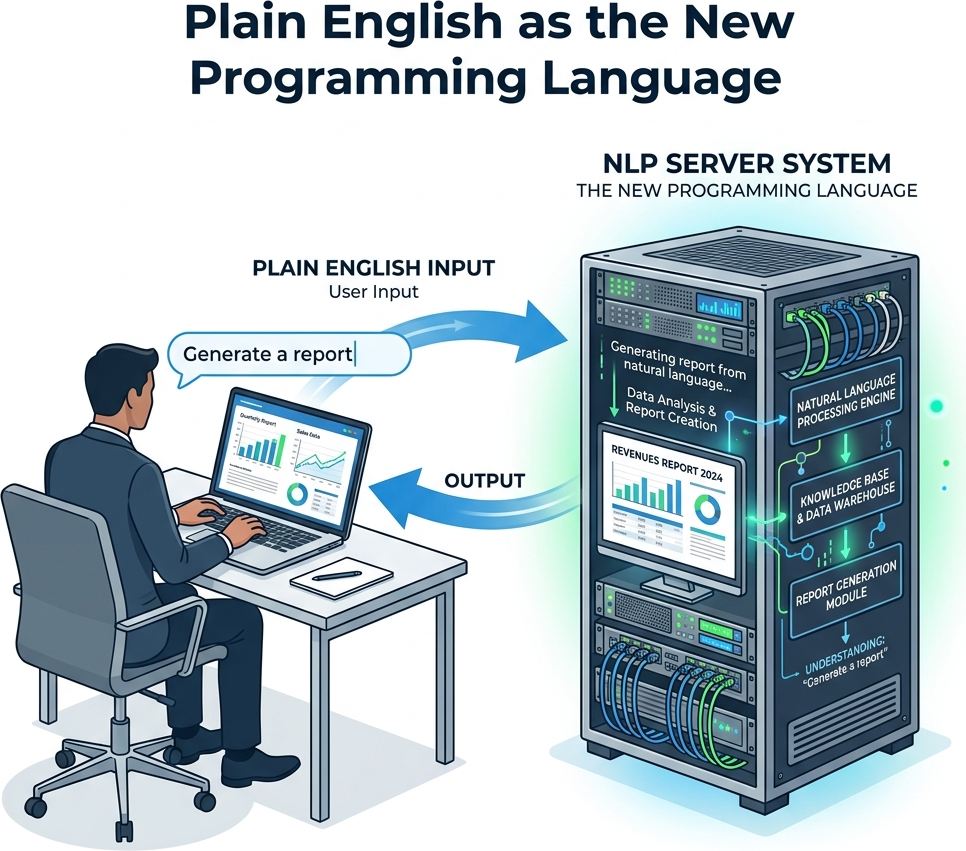
The way you interact with these tools is simply by typing plain English sentences (called "Prompts"). If you can write a text message or an email, you are fully qualified to use the most advanced supercomputers on the planet. This makes AI the most accessible technology ever created.
📌 Deep Dive: Understanding This Concept
As Generative AI systems become more complex, mastering the underlying principles of This Concept is essential for developers. Proper implementation in this area ensures that your AI applications remain scalable, performant, and secure when deployed to production environments.
Quick Knowledge Check
Test what you just learned
Question 1 of 2
When an AI completely makes up a false fact but states it with absolute confidence, what is it called?
Question 2 of 2
Why does an AI like ChatGPT sound so empathetic and human-like?
Loading results...