Generative AI seems like magic. You type a prompt, wait a few seconds, and out pops a perfectly written essay, a beautiful image, or a working piece of software code. But underneath the hood, there is no magic—just massive amounts of data, clever mathematics, and incredible computing power.
To truly master using AI, you need to understand the mechanics of how it generates its responses. Let's lift the hood and look at the engine.
1 The Foundation: Reading the Internet
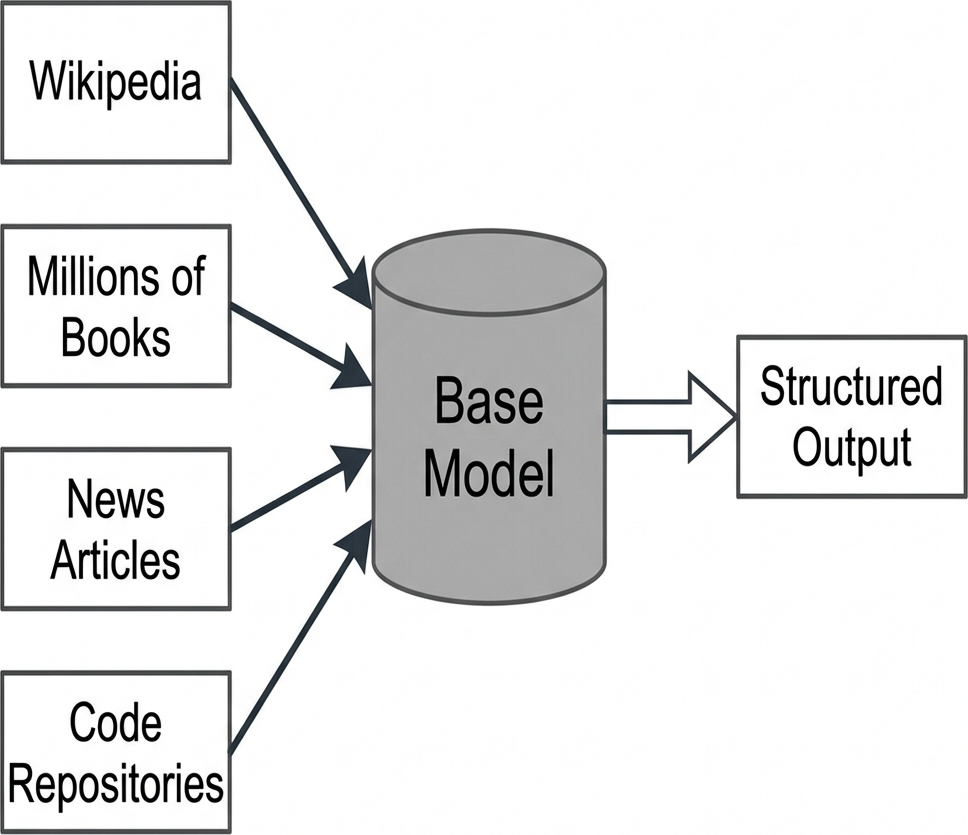
An AI model is born empty. It knows absolutely nothing. To teach it about the world, scientists feed it unimaginable amounts of data—essentially downloading the entire public internet. This includes Wikipedia, millions of books, news articles, Reddit forums, and software code repositories.
Finding the Patterns
As the AI reads this massive mountain of text, it isn't memorizing the exact sentences. Instead, it is analyzing the mathematical relationships between words. It learns that the word "bark" often appears near "dog" or "tree", and it learns the grammatical structure of how sentences are formed.
2 Tokens and The Neural Network Engine
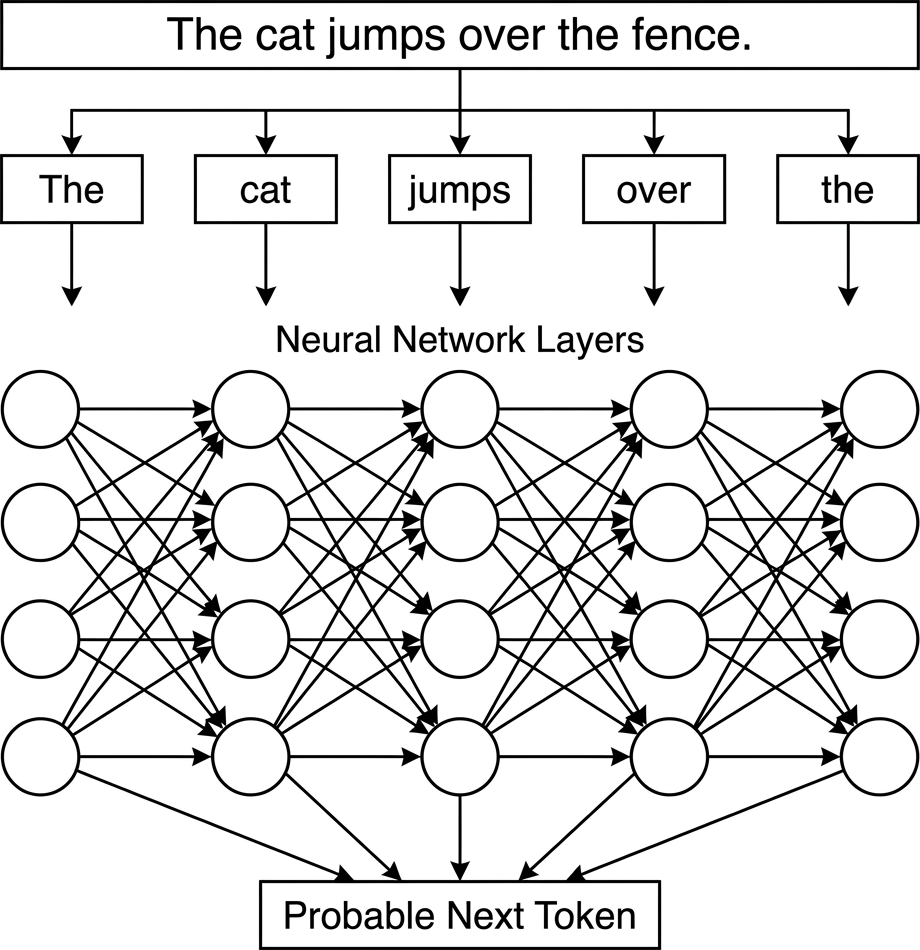
Computers do not understand letters; they only understand numbers. Before the AI can process your text, it has to chop it up into smaller pieces called Tokens.
Tokenization
A token is usually about 4 letters long, or roughly 3/4 of a word. For example, the word "Hamburger" might be chopped into three tokens: "Ham", "bur", and "ger". Each token is assigned a specific ID number.
The Neural Network
Once converted to numbers, these tokens are passed through an Artificial Neural Network. This is a complex web of interconnected mathematical nodes inspired by the human brain. The network calculates the probabilities of which tokens should logically come next based on everything it learned from reading the internet.
3 The Breakthrough: The Transformer Architecture
Before 2017, AI models read text like humans do: one word at a time, strictly from left to right. This meant that by the time the AI reached the end of a long paragraph, it had often "forgotten" what the first sentence was about.
The Attention Mechanism
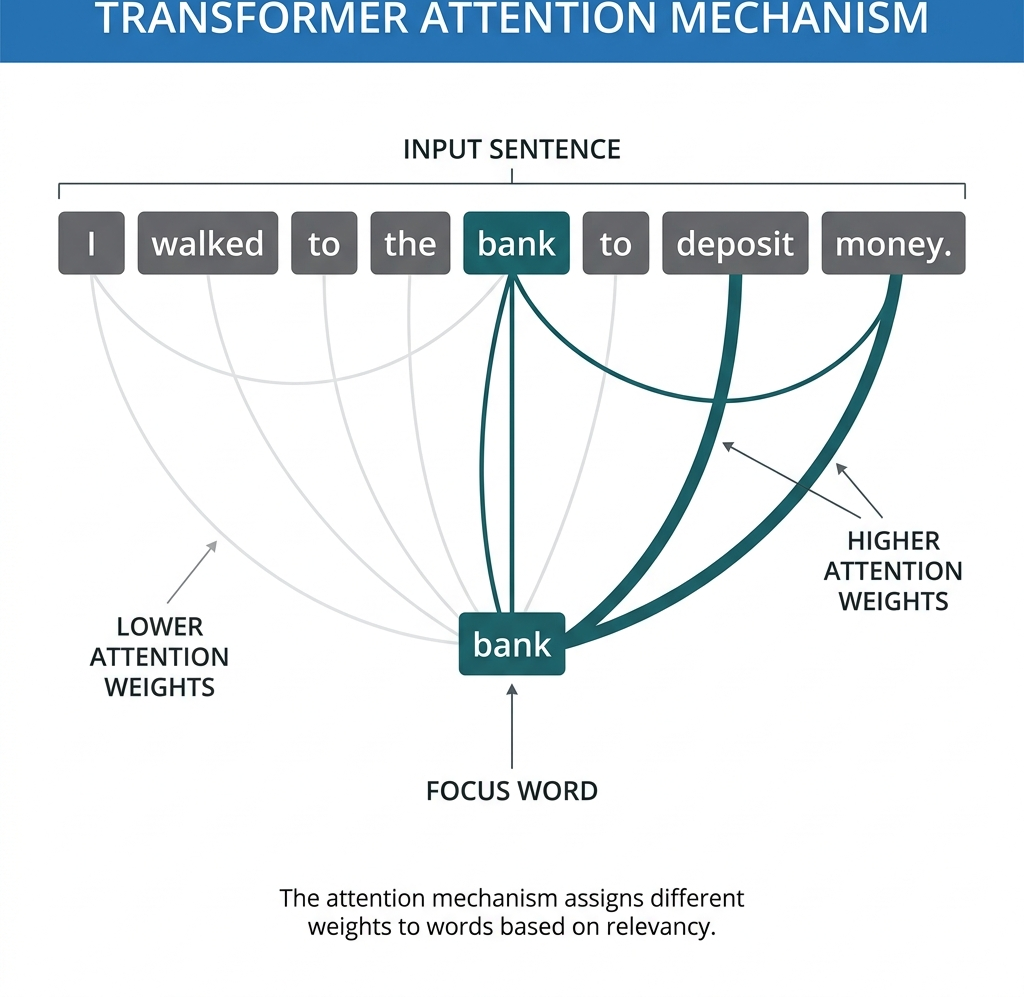
Then, Google researchers invented the Transformer architecture, which introduced the "Attention Mechanism." Instead of reading left to right, a Transformer looks at all the words in your prompt simultaneously.
It mathematically weighs how important every word is to every other word. For example, if you say "I walked to the bank to deposit money," the Attention Mechanism connects the word "bank" heavily to the word "deposit", allowing the AI to understand you mean a financial institution, not a river bank.
4 Fine-Tuning: Turning a Chaos Engine into an Assistant
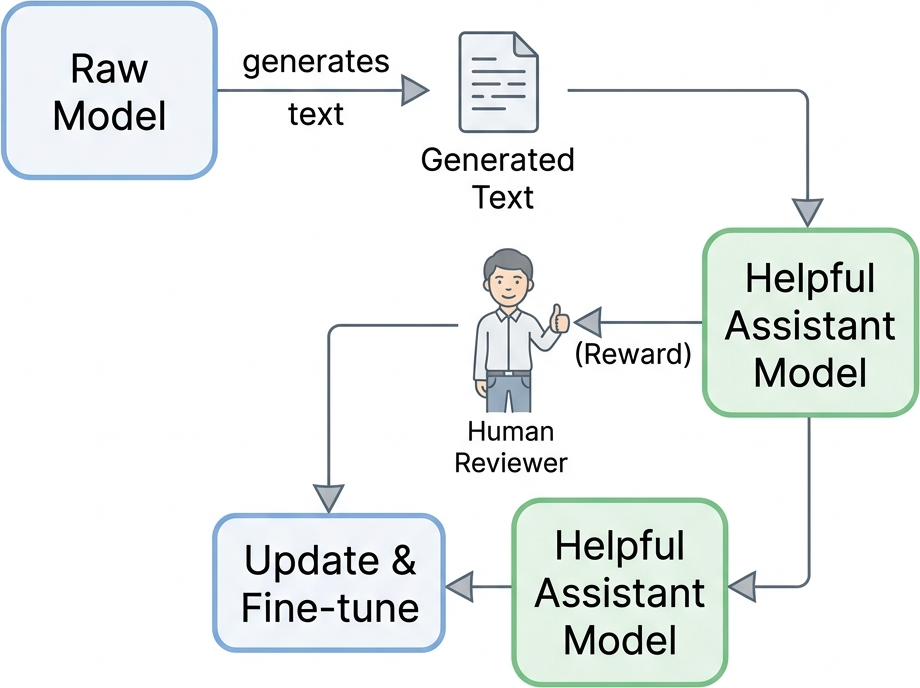
A raw "Base Model" that just read the internet is actually very unhelpful. If you give it the prompt "How do I bake a cake—, it might just predict that the next logical sentence is "How do I make frosting—, because it is just continuing the pattern of asking baking questions.
RLHF (Reinforcement Learning from Human Feedback)
To make the AI useful, it must go through Fine-Tuning. Companies hire thousands of humans to have conversations with the AI. When the AI gives a helpful, polite, and accurate answer, the human gives it a "thumbs up" (a positive reward). When it gives a bad answer, it gets a "thumbs down."
Through this intensive feedback loop, the wild, chaotic prediction engine is trained to behave like a helpful, conversational assistant.
💡 Summary: GenAI is a massive statistical engine. It chops your prompt into tokens, uses the Transformer Attention Mechanism to understand the context of the entire prompt simultaneously, and calculates the most probable next tokens based on its fine-tuned internet training.
📌 Deep Dive: Understanding This Concept
As Generative AI systems become more complex, mastering the underlying principles of This Concept is essential for developers. Proper implementation in this area ensures that your AI applications remain scalable, performant, and secure when deployed to production environments.