Generative AI and Deep Learning are powered by something called an Artificial Neural Network (ANN). This might sound like a scary, highly technical term, but the basic idea is actually quite simple to understand.
Let's take a look under the hood and see how the "brain" of an AI actually works.
1 The Brain Metaphor
When computer scientists wanted to build a machine that could learn, they looked at the best learning machine in the world: the human brain.
Your brain is made of billions of tiny cells called neurons. When you learn something new, these neurons send electrical signals to each other and form connections.
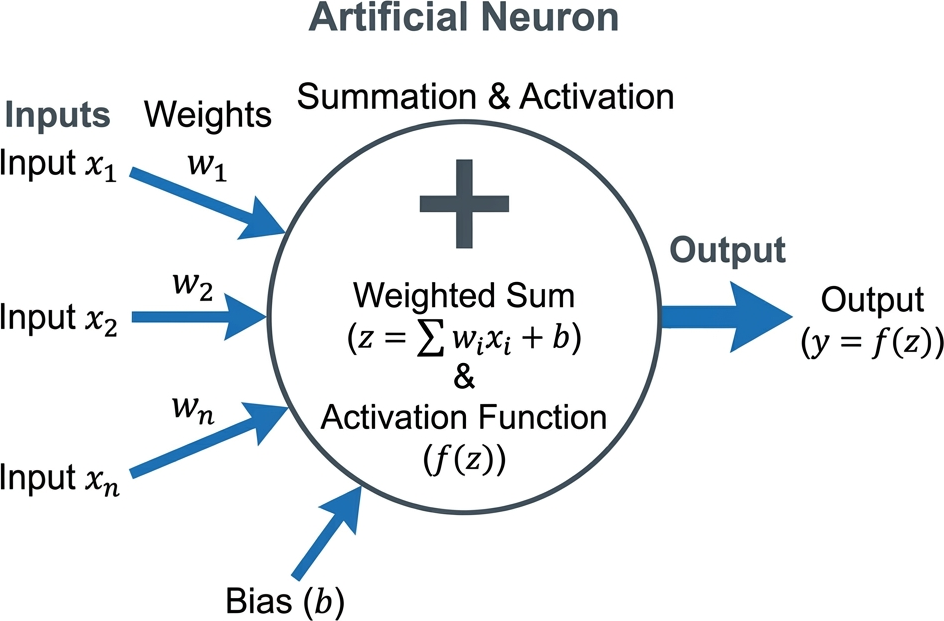
An Artificial Neural Network copies this idea. Instead of biological cells, it uses artificial "nodes" (which are basically just math equations in a computer). These nodes connect to each other and pass numbers back and forth to solve problems.
2 The Three Layers
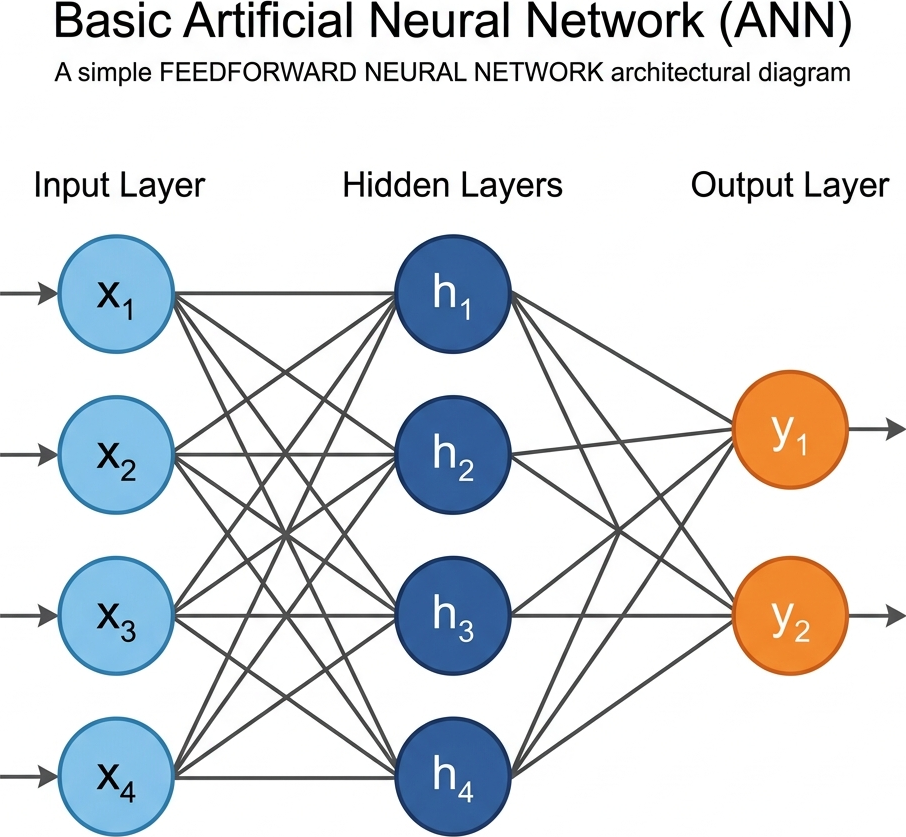
A neural network is organized into three main layers, like a sandwich.
- Input Layer: This is what you feed into the AI. If you are training the AI to recognize a cat, the Input Layer takes in all the raw pixels of the photo.
- Hidden Layers: This is the "meat" of the sandwich where the actual thinking happens. The image gets passed through dozens or hundreds of hidden layers. One layer might look for pointy shapes (ears), while another looks for long shapes (tails).
- Output Layer: This is the final answer. After all the hidden layers finish calculating, the Output Layer tells you what the AI decided. (e.g., "This is a cat.")
3 Weights: How Important is the Signal?
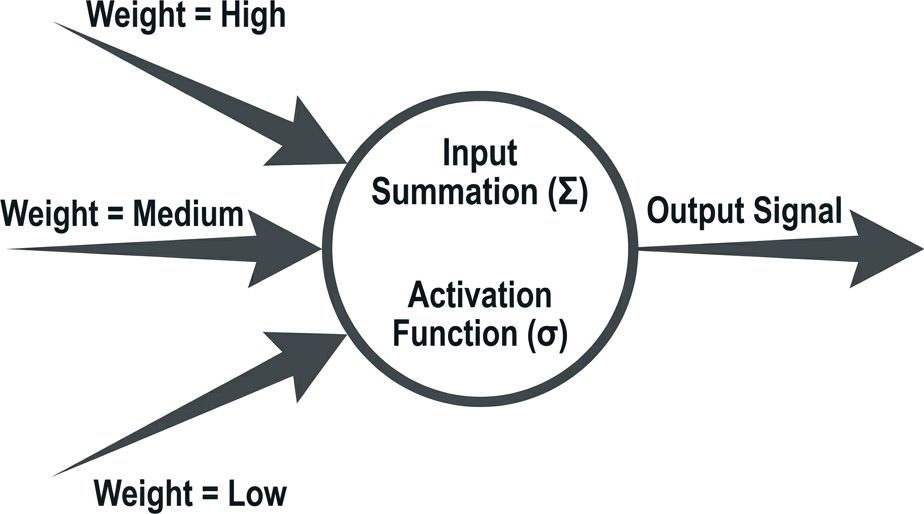
When the nodes inside the hidden layers talk to each other, they don't treat every signal equally. Every connection between two nodes has a Weight.
Think of a Weight as a volume knob. If a node finds something very important (like a whisker), it turns the volume up (a high weight). If it finds something useless (like a blank background), it turns the volume down (a low weight).
When an AI is "learning," all it is really doing is adjusting millions of these volume knobs until it gets the final answer right.
4 Learning by Making Mistakes
So, how does a neural network actually learn?
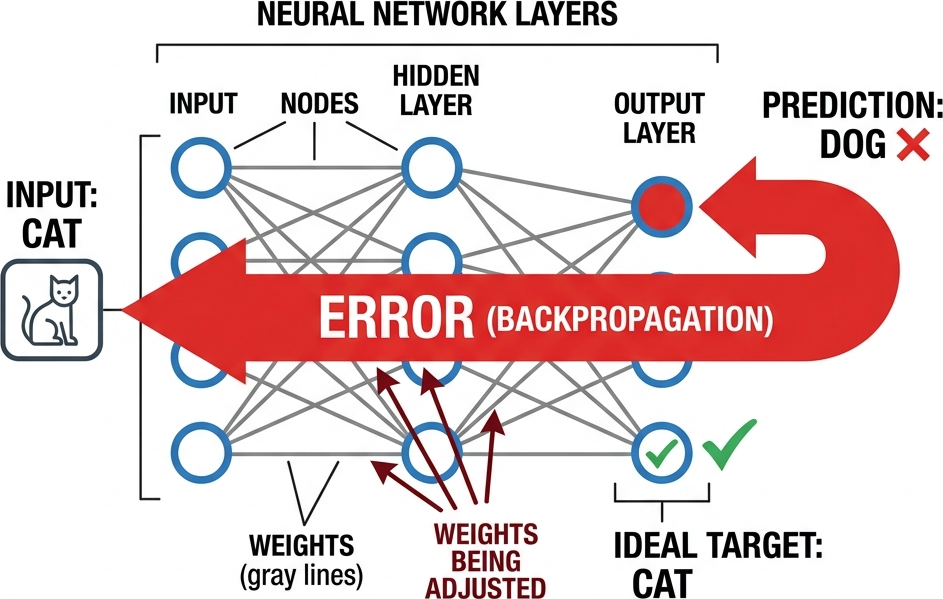
At first, all the volume knobs (weights) are completely random. When you show the AI a picture of a cat, it will probably guess wrong and say "Dog."
When it gets the answer wrong, a mathematical process called Backpropagation happens. The AI looks at its mistake, works backward through all the hidden layers, and slightly adjusts all the weights so it won't make that exact mistake again. It repeats this process millions of times until it stops making mistakes.
💡 Summary: A neural network copies the human brain using artificial nodes. Data flows through an Input Layer, gets processed by "Weights" in the Hidden Layers, and gives an answer in the Output Layer. The AI learns by constantly adjusting its weights every time it makes a mistake.
📌 Deep Dive: Understanding This Concept
As Generative AI systems become more complex, mastering the underlying principles of This Concept is essential for developers. Proper implementation in this area ensures that your AI applications remain scalable, performant, and secure when deployed to production environments.