In the last lesson, we learned that Neural Networks are built out of Artificial Neurons arranged in Layers. But what exactly is a neuron doing inside a computer?
Let's look at the actual anatomy of a network to see how simple math creates complex artificial intelligence.
1 Inside a Single Neuron
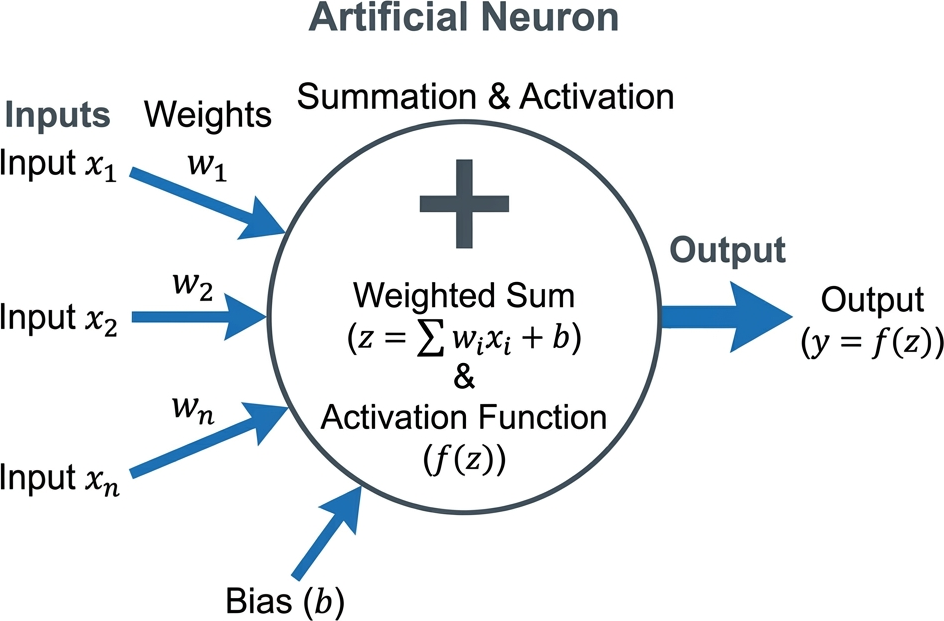
An artificial neuron (sometimes called a "node") is not a physical chip or a biological cell. It is literally just a tiny math equation sitting in the computer's memory.
Every neuron has one job: Take in numbers, do some basic math, and spit out a new number.
- Inputs: The neuron receives numbers from the previous layer.
- Math (Sum & Activate): It adds all those numbers together. Then it decides, "Is this number big enough to pass on— (This decision is called an Activation Function).
- Output: It sends its final number to the next layer.
2 Power in Numbers (The Layers)
If a single neuron is just doing simple addition, how can AI write poetry or generate art? The secret is in the numbers.
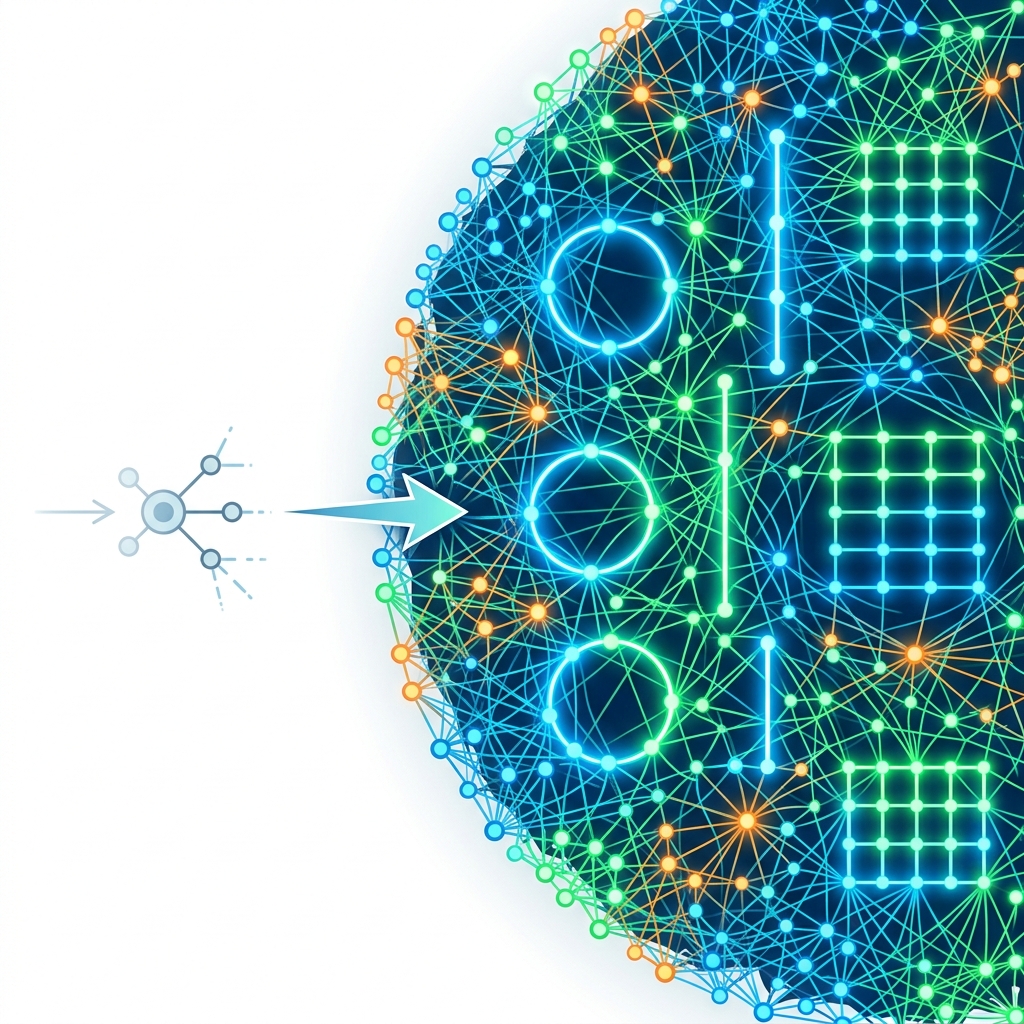
One neuron by itself is stupid. But when you put thousands of them into a Layer, they can work together. A single layer might look at a photo and recognize basic shapes like circles and lines.
3 Deep Learning: Stacking the Layers
To make the AI truly smart, you stack multiple layers on top of each other. This is where the term "Deep Learning" comes from. A network is "deep" because it has many hidden layers stacked together.
- Layer 1: Finds edges and lines in an image.
- Layer 2: Combines edges to find shapes (like circles).
- Layer 3: Combines shapes to find features (like eyes and ears).
- Final Layer: Looks at all the features and decides, "This is a cat."
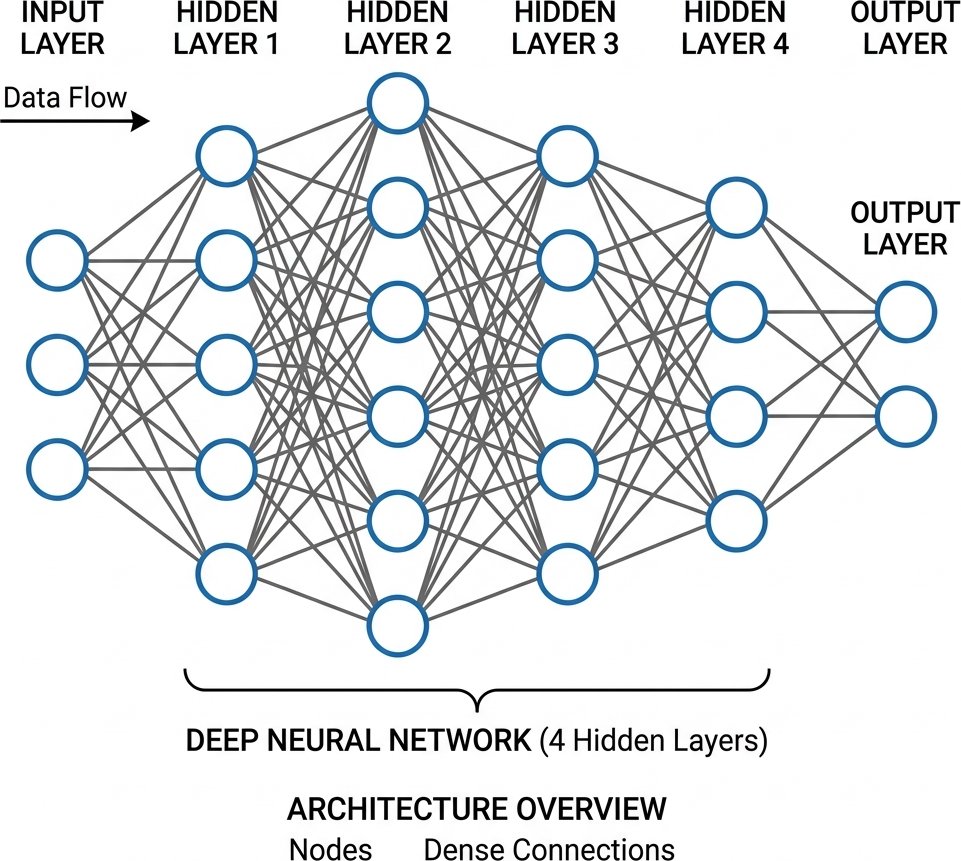
💡 Summary: A single neuron just does basic math. But when you arrange millions of neurons into "deep" layers, the network can process highly complex information step-by-step.
📌 Deep Dive: Understanding This Concept
As Generative AI systems become more complex, mastering the underlying principles of This Concept is essential for developers. Proper implementation in this area ensures that your AI applications remain scalable, performant, and secure when deployed to production environments.