There are many ways to talk to an AI. As you get better at using Generative AI, you will start using different styles of prompts to get exactly what you want.
Let's look at the three most common ways people write prompts, starting from the easiest and moving to the most powerful.
1 Zero-Shot Prompting
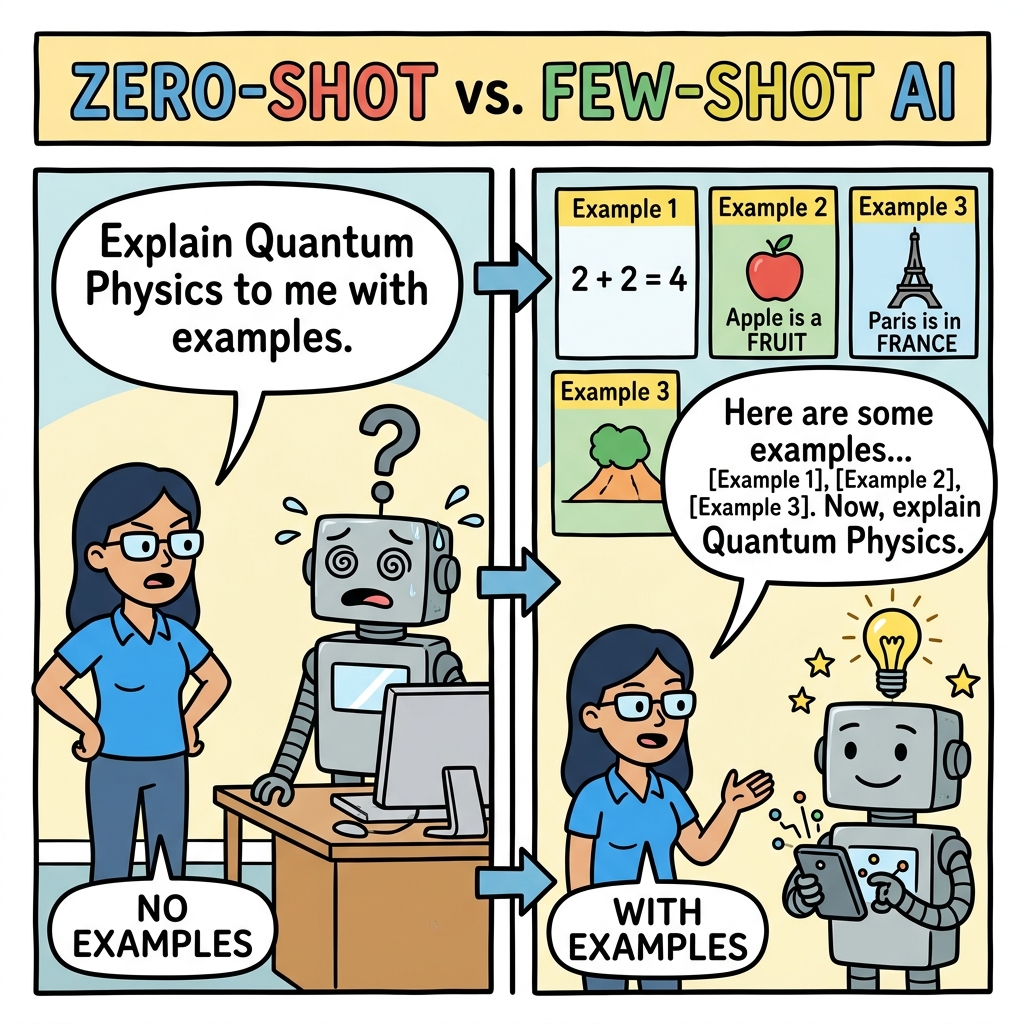
A "Zero-Shot" prompt is the most basic way to use AI. It means you are asking the AI a question without giving it any examples first. You are giving it "zero shots" to see what you want.
Example: "Translate the word 'Hello' into French."
This works great for simple facts. But it is bad for complex tasks. It is like asking a new employee to write a report without showing them what your reports normally look like. They will probably guess the format wrong.

2 Few-Shot Prompting
If Zero-Shot gives the AI no examples, "Few-Shot" prompting gives the AI a few examples before asking the real question. This is how you teach the AI to match your exact style, tone, or format.
Example:
English: Goodbye -> French: Au revoir
English: Thank you -> French:
By showing the AI a pattern first, you leave no room for guessing. The AI simply copies the pattern and gives you the perfect answer.
3 Chain-of-Thought Prompting
Sometimes you need the AI to solve a hard math or logic problem. If you ask a hard question normally, the AI might try to jump straight to the final answer and get it wrong.
"Chain-of-Thought" prompting forces the AI to slow down. You do this by simply adding the phrase "Think step-by-step" to the end of your prompt.
When you tell the AI to think step-by-step, it writes out its logic (Step 1, Step 2, Step 3) before giving the final answer. This stops the AI from making careless mistakes on hard problems.
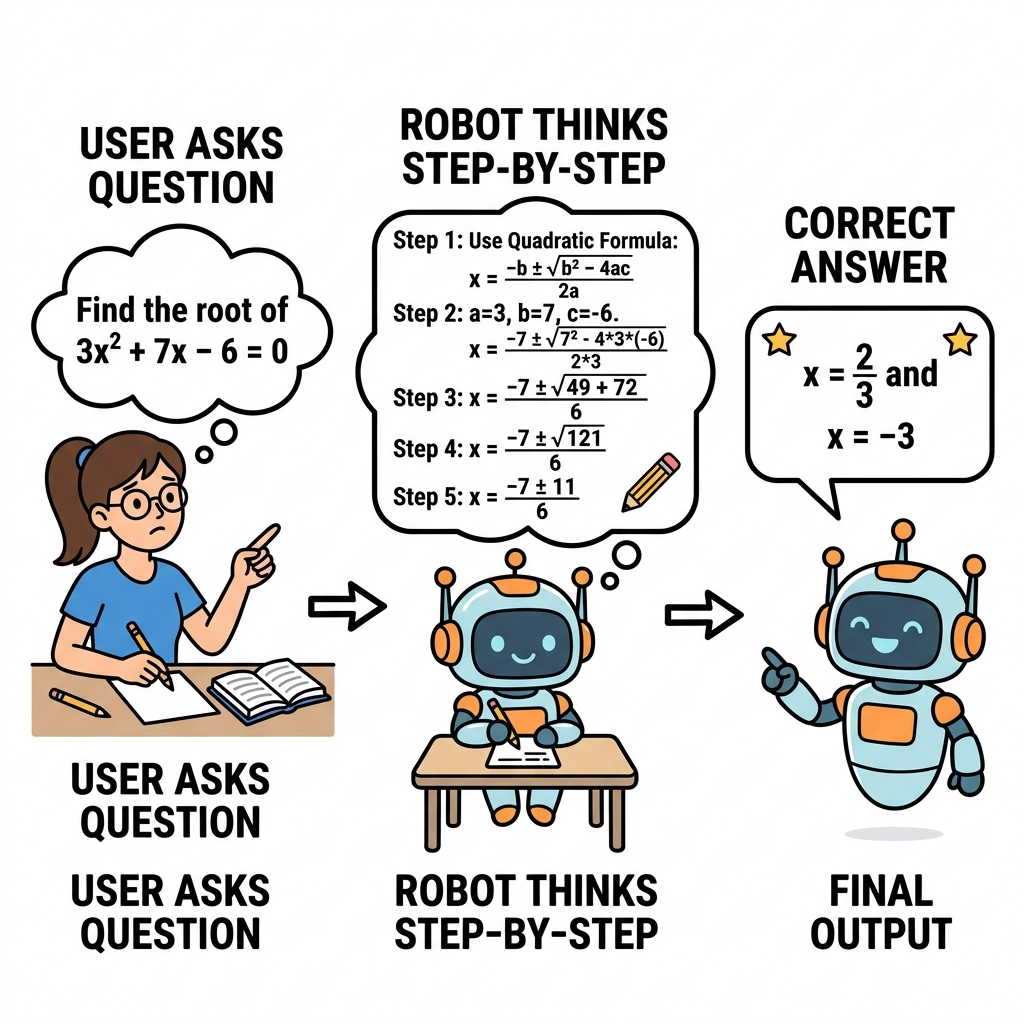
💡 Summary: Zero-Shot asks a question with no examples. Few-Shot gives examples first to lock in the format. Chain-of-Thought tells the AI to "think step-by-step" to solve hard problems.
📌 Deep Dive: Understanding This Concept
As Generative AI systems become more complex, mastering the underlying principles of This Concept is essential for developers. Proper implementation in this area ensures that your AI applications remain scalable, performant, and secure when deployed to production environments.