📌 What are Agentic Frameworks?
Building an AI agent from scratch using raw API calls is incredibly difficult. You have to write all the code to manage the agent's memory, parse the tool outputs, and manually code the Thought -> Action -> Observation loop (ReAct).
To make this easier, developers use Agentic Frameworks. These are code libraries that abstract away the complexity, providing pre-built functions for orchestration, memory, and tool execution.
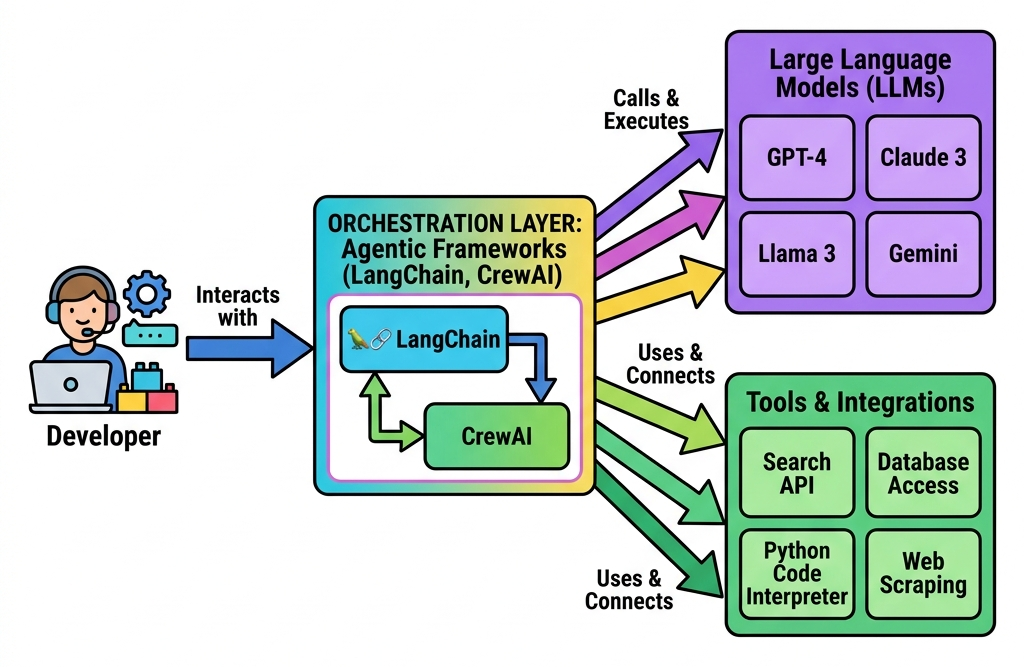
📌 LangChain & LangGraph
LangChain is the most popular framework in the industry. It was originally built for chaining prompts together (e.g., getting a response from Prompt A, and feeding it into Prompt B). Today, it is primarily used alongside LangGraph to build complex, stateful agents.
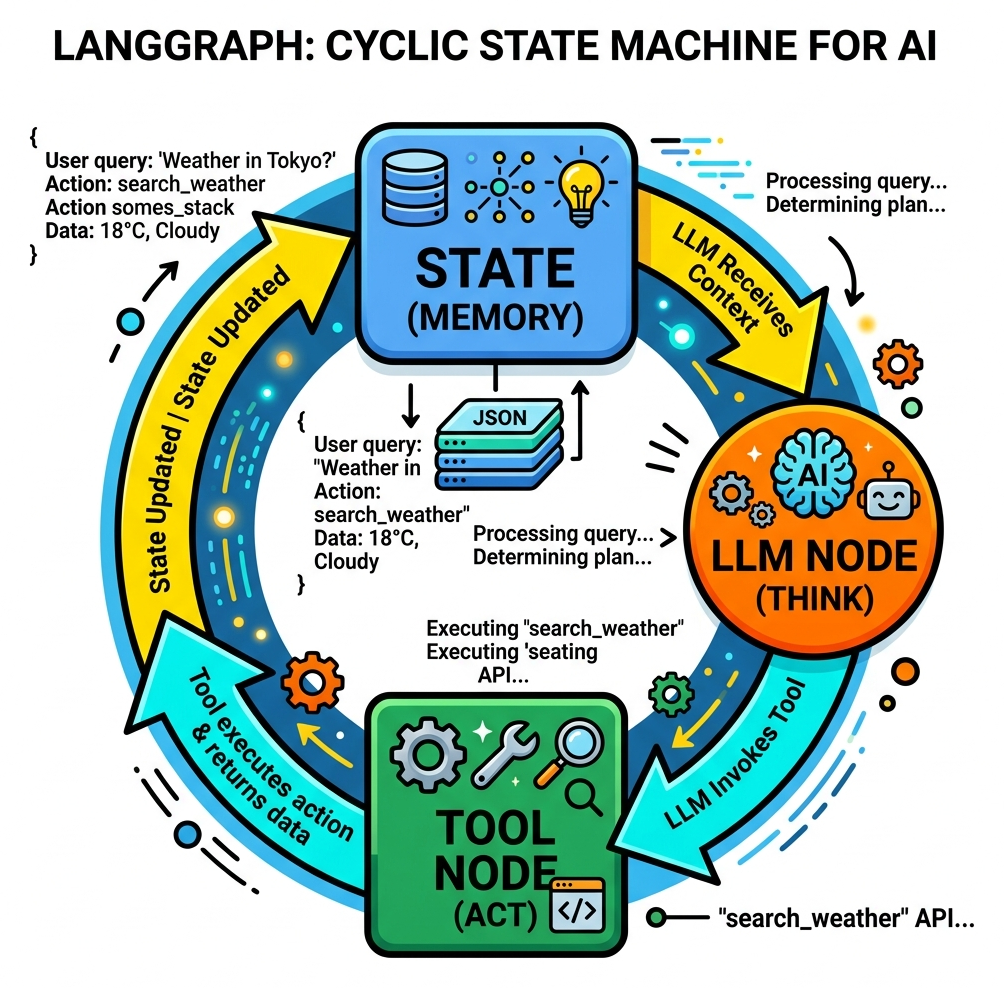
In LangGraph, you define your agent as a graph of nodes and edges. One node might be "Think", another node might be "Use Tool". The framework automatically cycles data through these nodes and maintains a central "State" (memory) for the entire duration of the task.
📌 CrewAI
While LangGraph is highly technical and node-based, CrewAI takes a different approach. CrewAI is designed specifically for Multi-Agent Systems.
In CrewAI, you don't define nodes and edges. Instead, you define "Agents", "Tasks", and a "Crew". You treat the AI exactly like you would treat a human employee.
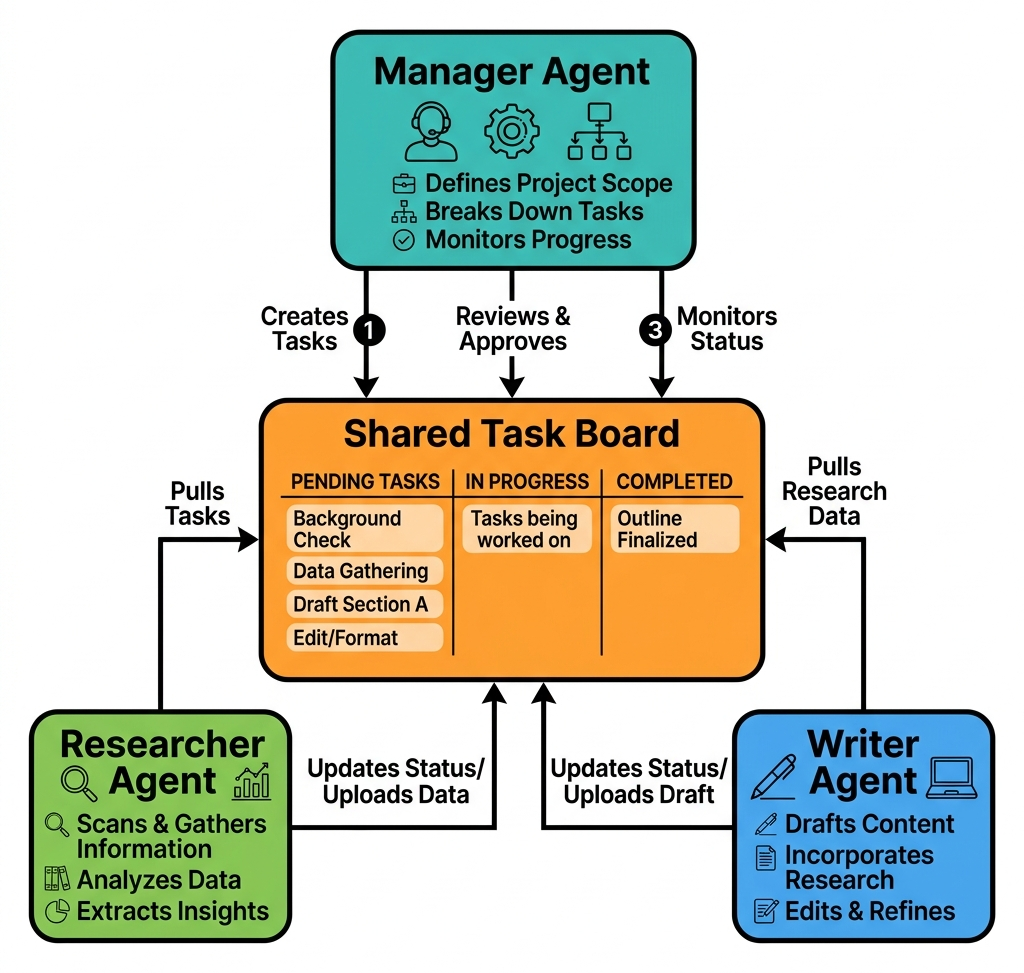
For example, you could define a Senior_Researcher agent and give them a goal to "find market trends". You define a Lead_Writer agent and give them a goal to "write an engaging article based on research". You put them both in a Crew, hit start, and they will automatically converse and collaborate to finish the job.
Quick Knowledge Check
Test what you just learned about Agent Frameworks
Question 1 of 1
What is the primary difference in philosophy between LangGraph and CrewAI?
Loading results...