📌 The Need for Human-in-the-Loop (HITL)
Autonomous agents are powerful, but they are also unpredictable. If you give an agent access to your email server or production database, a single hallucination could lead to a disastrous action (like deleting user data or sending an inappropriate email to a client).
To mitigate this risk, we use a pattern called Human-in-the-Loop (HITL).
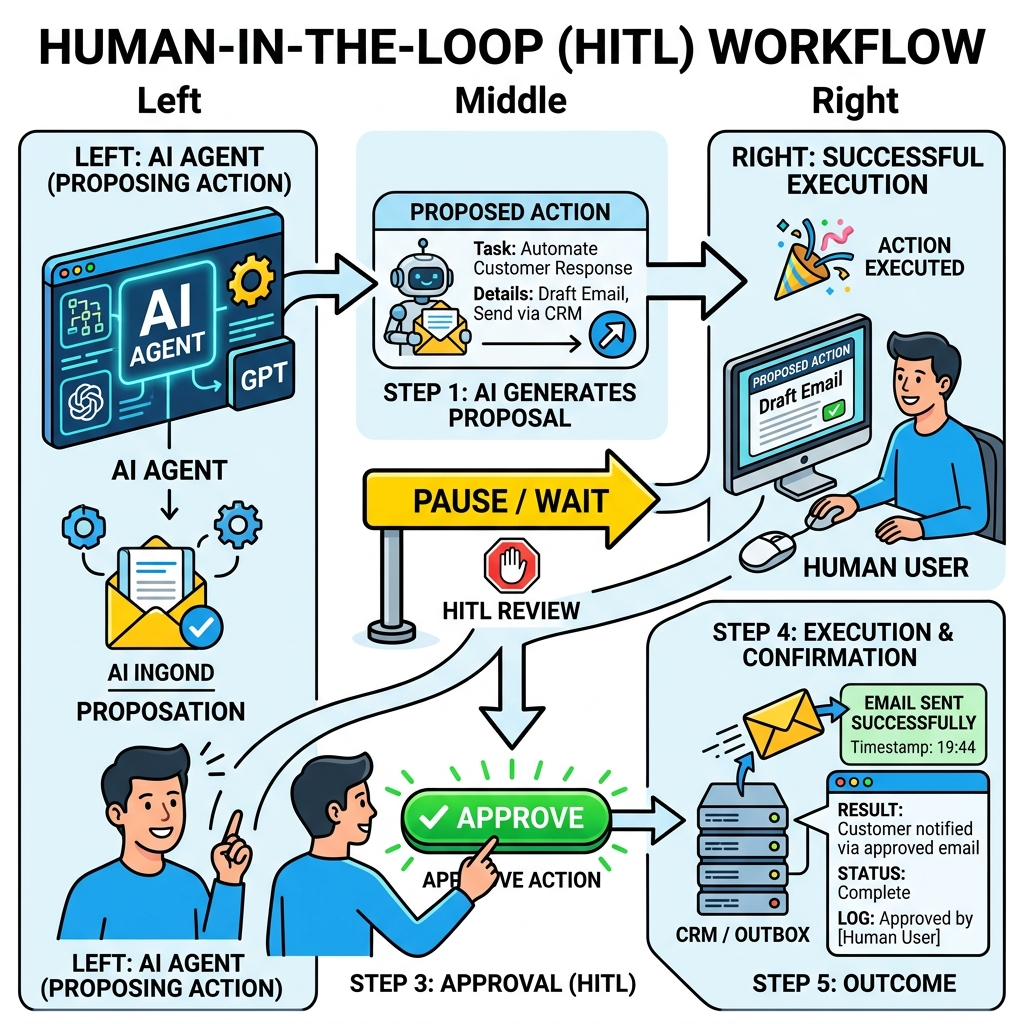
In frameworks like LangGraph, you can set breakpoints on specific tool nodes (e.g., the Execute_SQL node). When the agent reaches this node, the state machine pauses indefinitely. It waits for an external API call—usually triggered by a human user clicking an "Approve" button on a frontend UI—before it executes the tool and resumes its workflow.
📌 Evaluating Agent Performance
In traditional software engineering, you write unit tests. If 2 + 2 == 4, the test passes. But how do you test an AI agent? LLM outputs are non-deterministic, and there are often many "correct" paths an agent can take to solve a problem.
Because traditional assertions fail, the industry relies on a pattern called LLM-as-a-Judge.
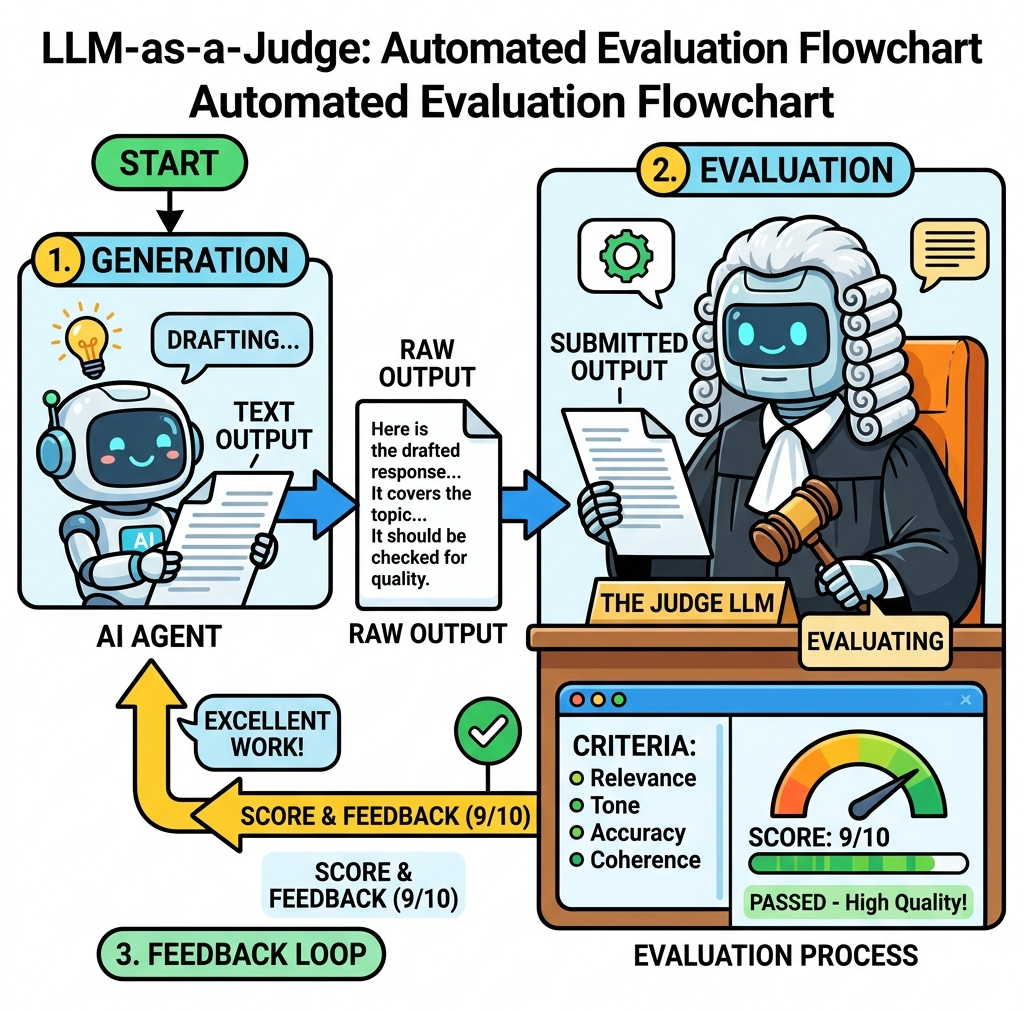
Using evaluation frameworks like LangSmith or Ragas, developers capture the entire trajectory of the agent (its thoughts, its tool calls, and its final answer). They then feed that trajectory into a massive, highly capable model (like GPT-4). The "Judge" model is prompted to score the agent's performance on a scale of 1-10 based on specific rubrics, such as "Did the agent use the correct tool?" or "Is the final answer factually accurate?"
Quick Knowledge Check
Test what you just learned about agent safety
Question 1 of 1
Why are traditional unit tests insufficient for evaluating autonomous AI agents?
Loading results...