📌 Defining Autonomy in AI
In traditional software, code follows a strict, predefined path. Even in a simple LLM chatbot, the AI only speaks when spoken to and relies entirely on the user's prompt to guide the conversation.
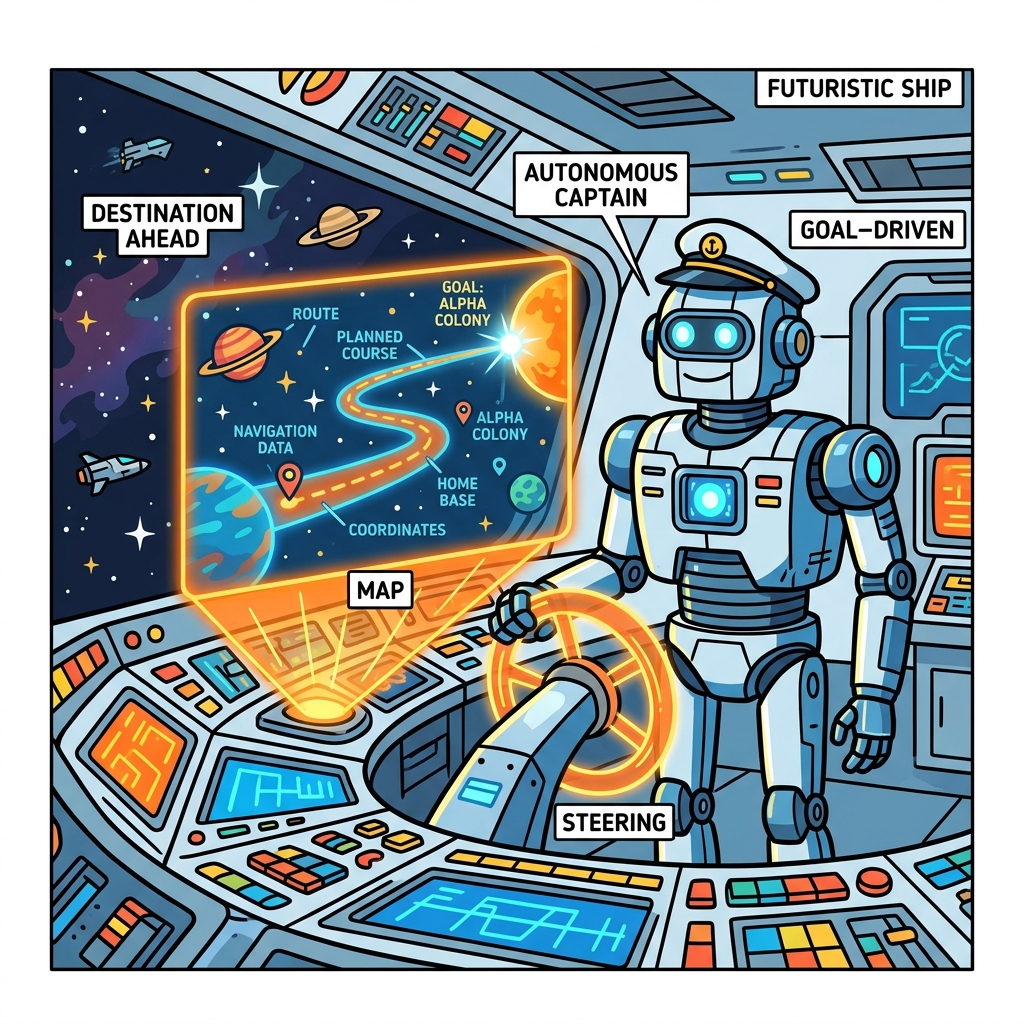
An Autonomous Agent flips this dynamic. Instead of just answering questions, an agent is given a high-level goal. It then perceives its environment, makes its own decisions on how to achieve that goal, and executes actions—all with minimal human intervention.
📌 The Core Agent Loop: Observe, Think, Act
How does an agent actually function autonomously? It runs continuously through a fundamental loop (often referred to as the ReAct loop or OODA loop in robotics).
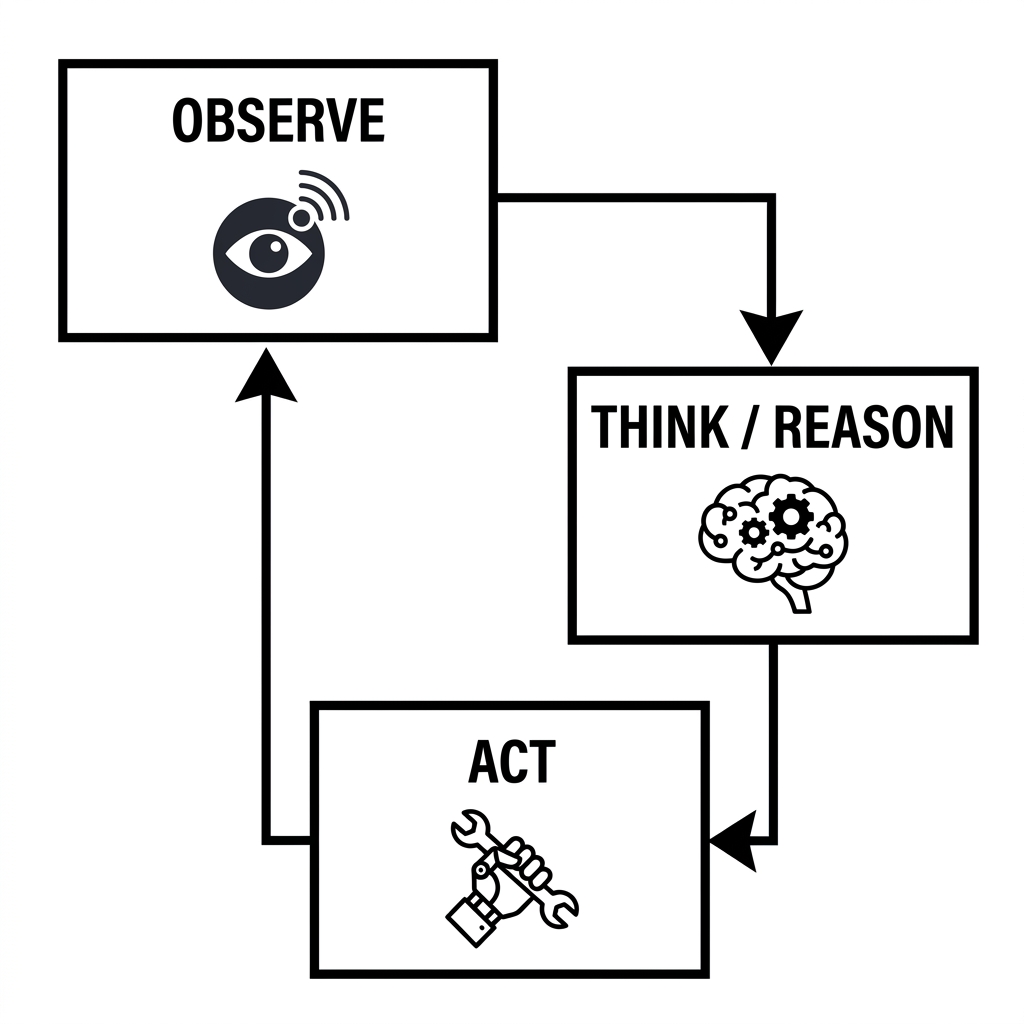
- Observe: The agent gathers data from its environment. This could be reading a user's prompt, scraping a webpage, or parsing an error message.
- Think (Reason): The agent's "brain" (the LLM) analyzes the observation. It decides what to do next based on its overarching goal and the current state of the world.
- Act: The agent uses an API or Tool to execute a physical or digital action (e.g., executing a Python script, sending an email, clicking a button on a webpage). After acting, it loops back to Observe to see the result of its action.
📌 Real-World Examples
We are already seeing autonomous agents in the wild:
- AutoGPT / BabyAGI: Early experimental agents where a user gives a massive goal like "grow my Twitter following" and the agent autonomously writes tweets, analyzes engagement, and adjusts its strategy over days.
- Devin (AI Software Engineer): An agent that doesn't just autocomplete code, but can read a GitHub issue, plan a solution, spin up a sandbox, write the code, run unit tests, read the error logs, fix its own bugs, and submit a pull request.
Quick Knowledge Check
Test what you just learned about Autonomous Agents
Question 1 of 1
Which of the following best describes the "Think" step in the Agent Loop?
Loading results...