📌 The Generalist: Single-Agent Systems
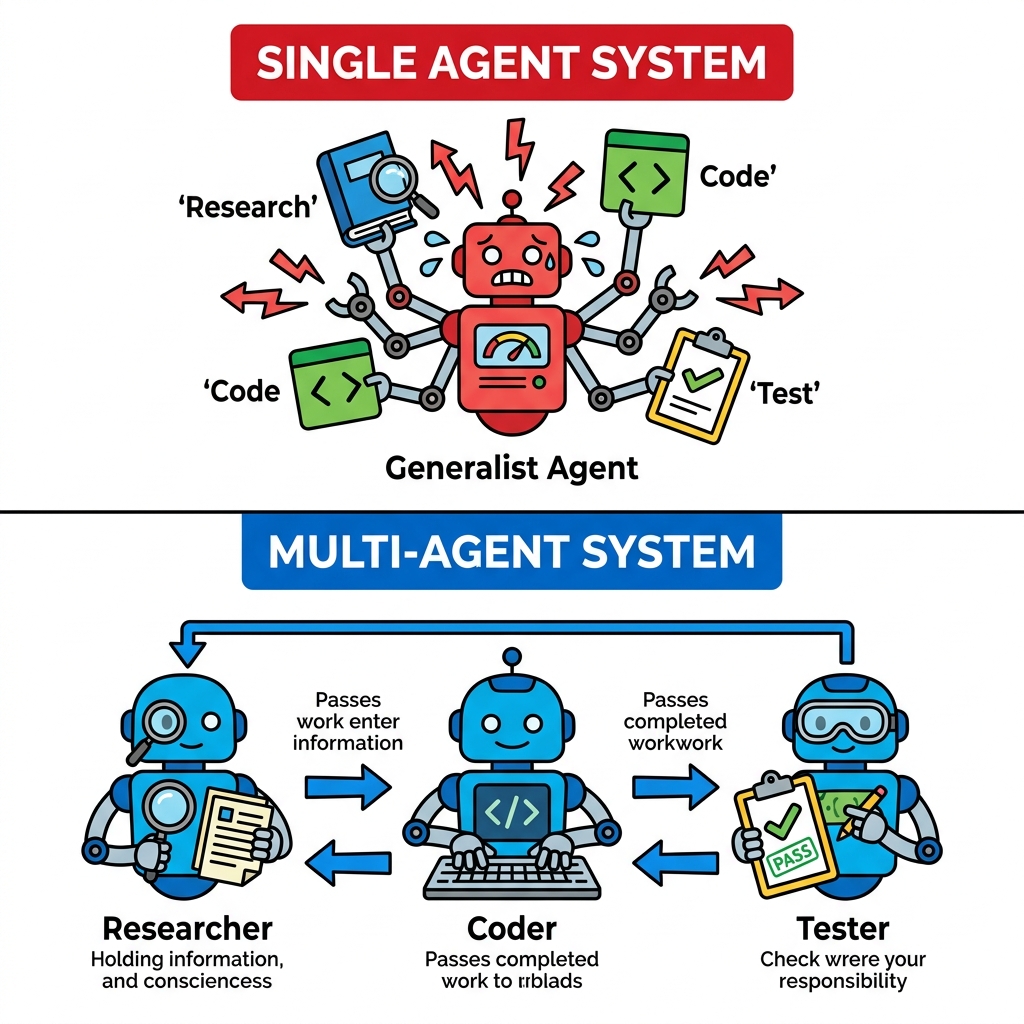
In a Single-Agent System, you have one AI brain trying to do everything. You give it a complex prompt, provide access to a toolbox (like a web search tool and a code execution tool), and ask it to figure everything out on its own.
Pros: Very simple to set up and works well for straightforward, linear tasks.
Cons: A single agent easily gets overwhelmed by complex workflows. Just like a single human struggles to simultaneously be a researcher, a software engineer, and a QA tester without losing track of details, a single LLM's context window gets polluted, leading to hallucinations or forgotten instructions.
📌 The Specialists: Multi-Agent Systems
A Multi-Agent System solves the complexity problem by breaking a large task into smaller pieces, handled by a team of specialized AI agents. Each agent gets a very specific system prompt and only the tools they actually need.
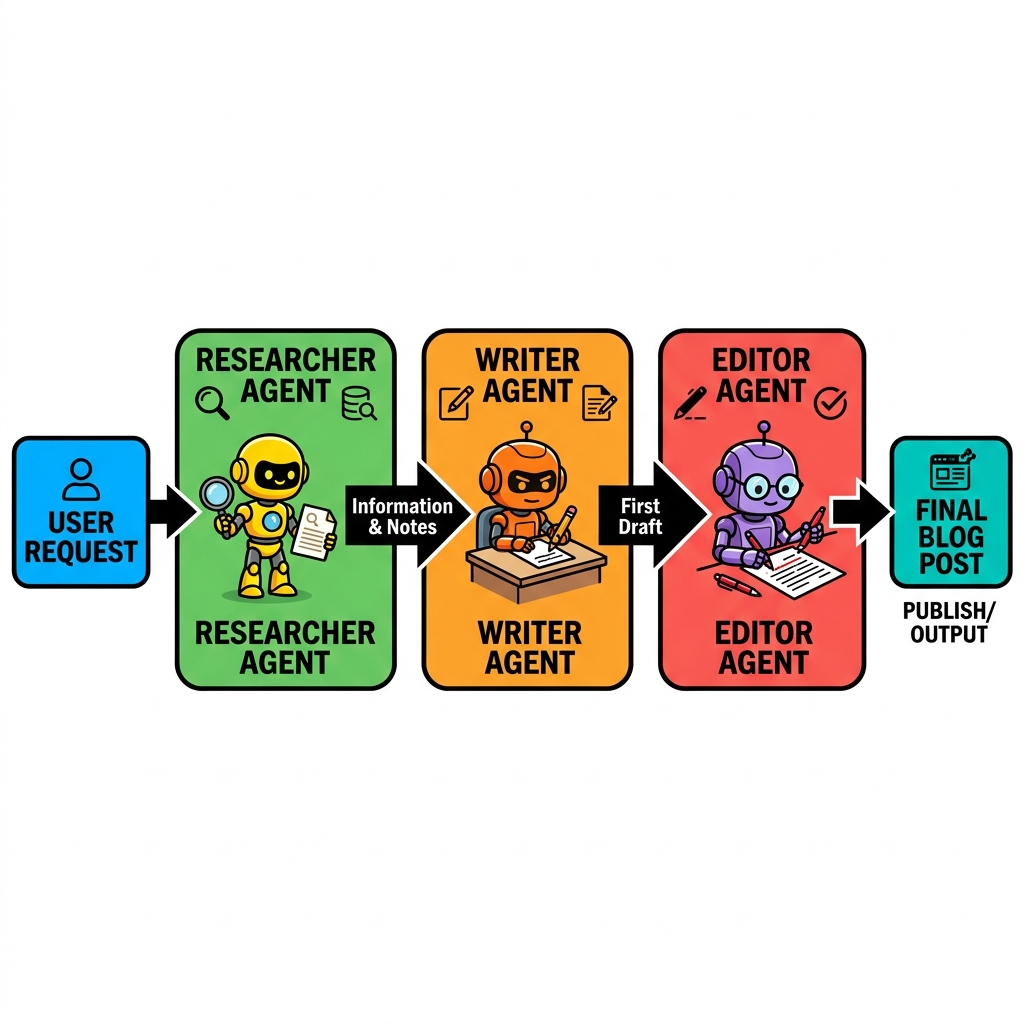
For example, if you want AI to write a blog post based on recent news:
- Agent 1 (The Researcher): Only has access to Web Search. Its only job is to find facts and summarize them.
- Agent 2 (The Writer): Has no external tools. Its job is to take the Researcher's notes and write an engaging draft.
- Agent 3 (The Editor): Analyzes the draft against a style guide and provides feedback to the Writer to fix errors.
📌 Multi-Agent Architectural Patterns
How do multiple agents actually talk to each other? Developers usually connect them using one of these common architectural patterns:
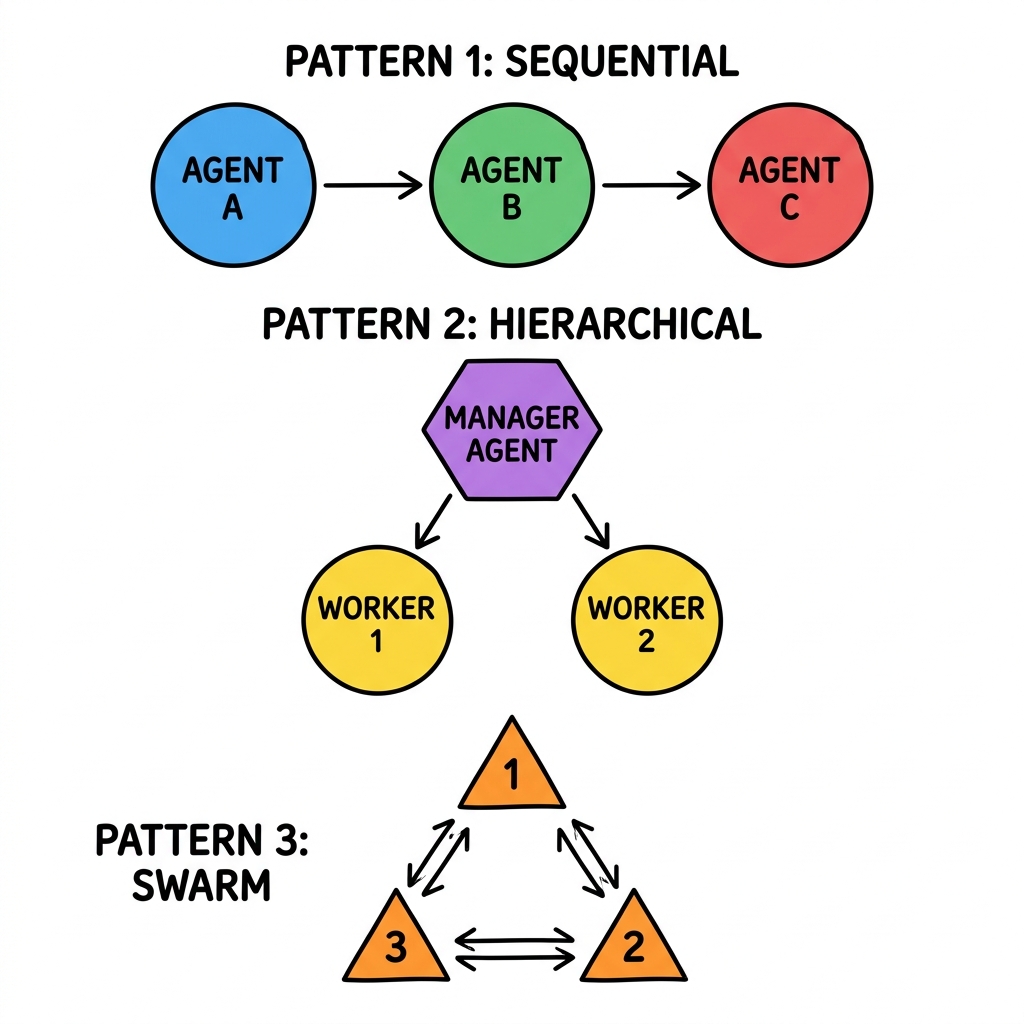
- Sequential (The Assembly Line): Work flows in one direction. Agent A finishes its job and passes the output to Agent B, who passes it to Agent C.
- Hierarchical (Manager-Worker): A "Manager" agent receives the overarching goal from the user. It breaks the goal down and delegates sub-tasks to specialized "Worker" agents, reviews their work, and compiles the final answer.
- Swarm (Joint Chat): Multiple agents sit in a shared digital "chat room". They see all messages and dynamically decide who should speak or act next based on the current state of the conversation.
Quick Knowledge Check
Test what you just learned about Agent Systems
Question 1 of 1
What is the primary advantage of a Multi-Agent System over a Single-Agent System?
Loading results...