Generative AI didn't happen overnight. For years, computers were actually very bad at reading and writing text.
Let's take a quick look at how we went from slow, forgetful AI to the massive brains that power ChatGPT today.
1 The Old Way: RNNs (Reading One Word at a Time)
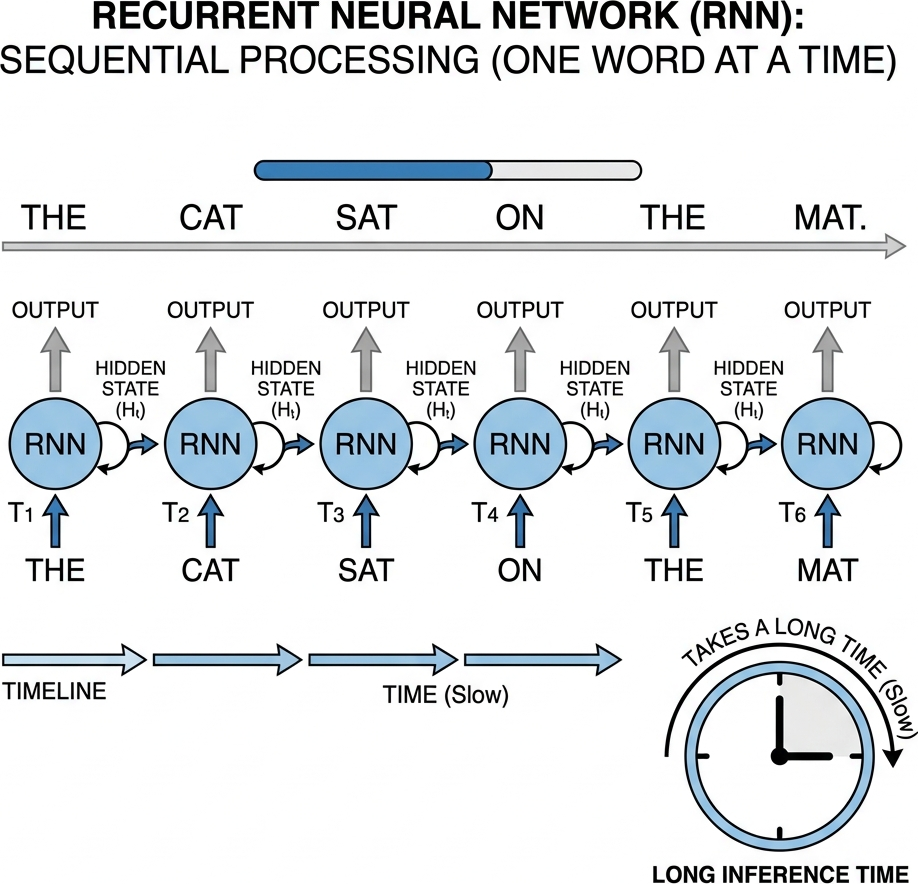
Before 2017, the best AI for reading text was called a Recurrent Neural Network (RNN).
An RNN read sentences the exact same way a human reads a book: one word at a time, from left to right.
This caused a massive problem. If you gave an RNN a very long paragraph, by the time it got to the end, it had completely forgotten what the first sentence was about. It was also incredibly slow, because it had to wait for word #1 to finish before it could look at word #2.
2 The Breakthrough: The Transformer
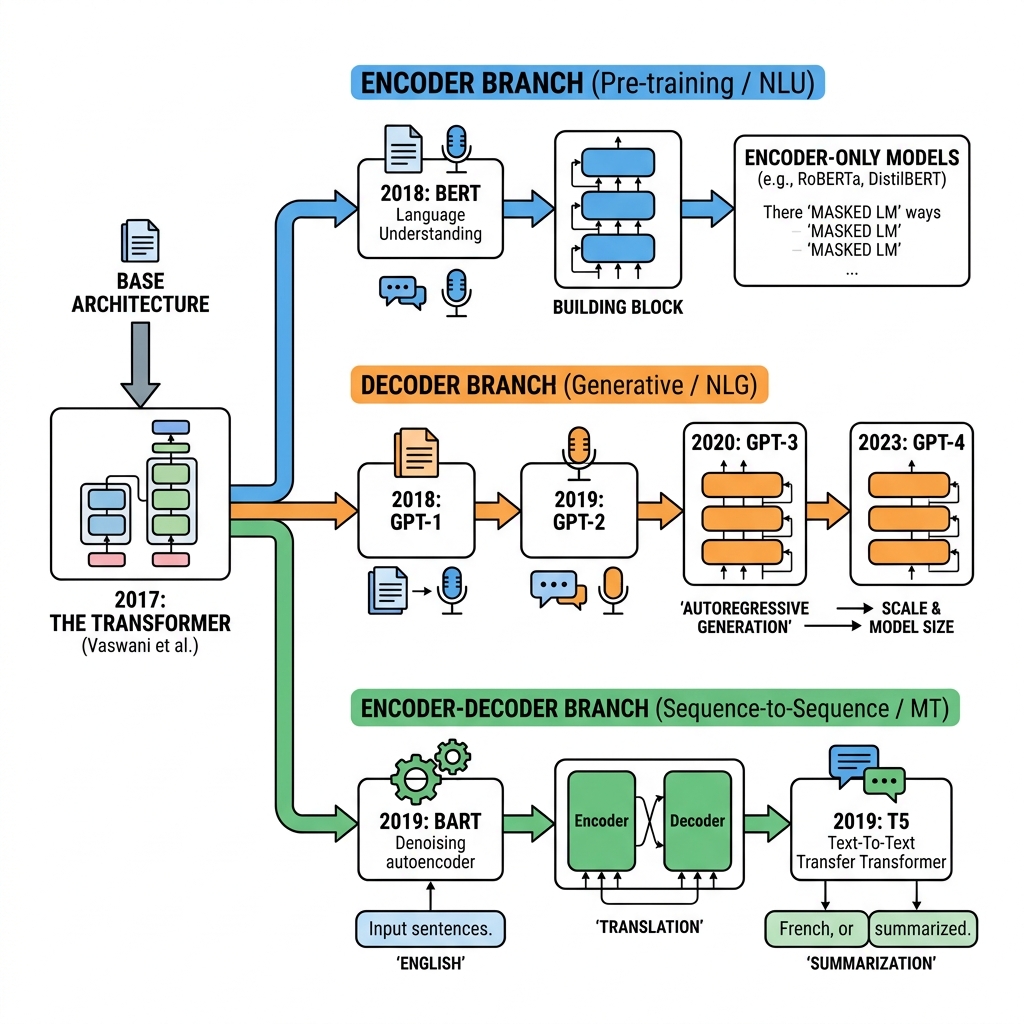
In 2017, researchers at Google published a famous paper called "Attention Is All You Need". They invented a brand new type of AI called the Transformer.
Instead of reading a sentence one word at a time, a Transformer reads the entire paragraph at the exact same time.
Because it looks at all the words at once, it can see the context of the whole story instantly. It never forgets the beginning of the sentence, and it is lightning fast because it processes everything in parallel.
3 The "T" in ChatGPT
If you've ever wondered what the "T" in ChatGPT stands for, it stands for Transformer (Generative Pre-trained Transformer).
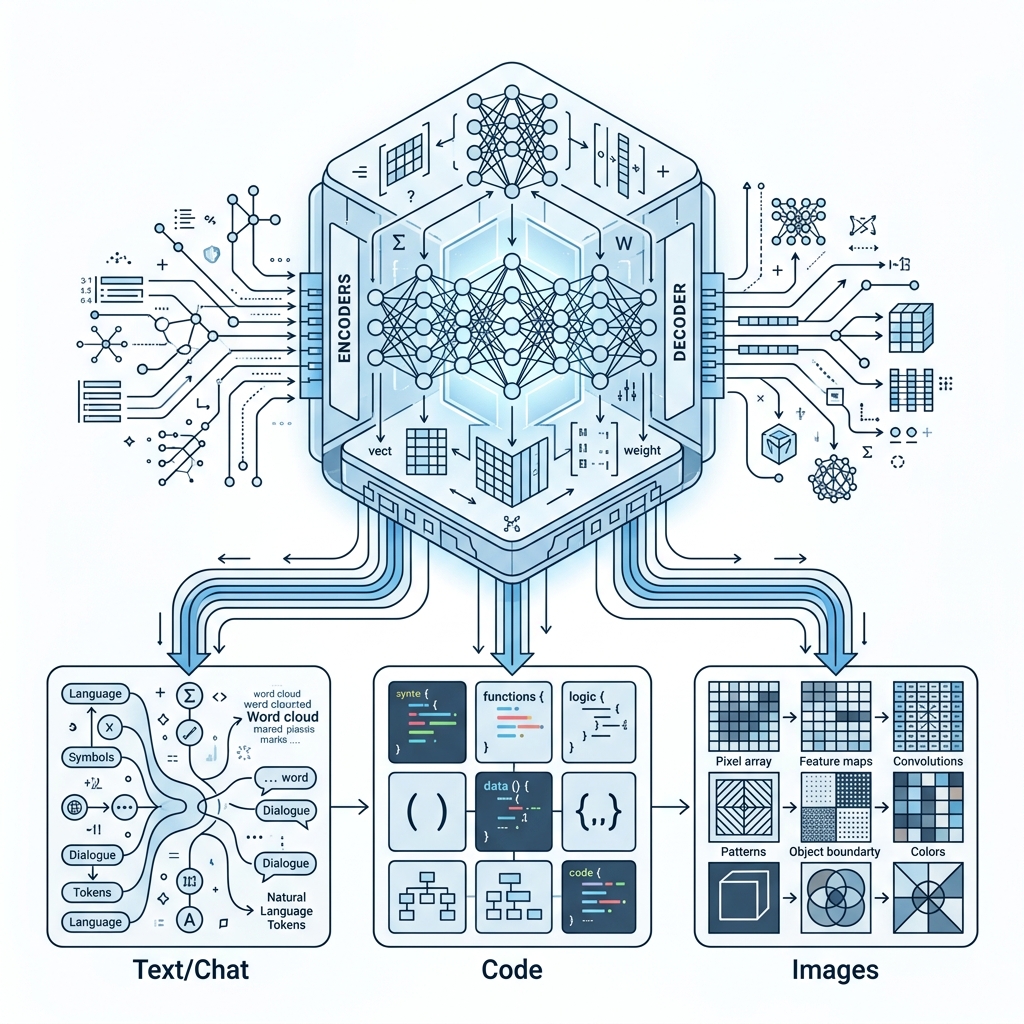
Every single modern Generative AI—whether it is writing code, generating images, or chatting with you—is powered by this exact same Transformer technology. It is the engine that made the AI boom possible.
💡 Summary: Older AI (RNNs) read text slowly, one word at a time, and forgot things easily. Modern AI (Transformers) read everything all at once, making them incredibly fast and smart.
📌 Deep Dive: Understanding This Concept
As Generative AI systems become more complex, mastering the underlying principles of This Concept is essential for developers. Proper implementation in this area ensures that your AI applications remain scalable, performant, and secure when deployed to production environments.