Even though talking to an AI feels like talking to a human, it is still a machine. If you want the best results, there are a few rules you should always follow.
Let's look at the best practices to use, and the common mistakes to avoid.
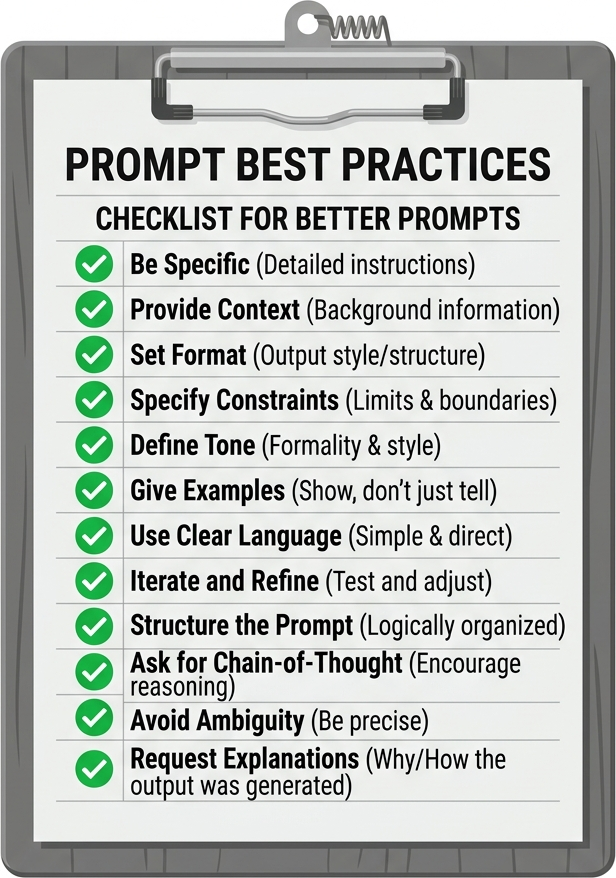
1 Best Practices (What To Do)
- Be Specific, Not Vague: Instead of "Write a blog post about dogs," say "Write a 500-word blog post about how to train a Golden Retriever puppy."
- Provide Context: Tell the AI why you need this. "I am writing this for first-time dog owners."
- Set the Format: Tell the AI exactly how you want the answer to look. "Use bullet points and bold the most important words."
- Assign a Persona: Always use the "Act as a..." trick to get a better tone.
2 Common Mistakes (What NOT To Do)
- Brain Dumping: Don't paste 50 pages of unorganized thoughts and just say "fix this". Give the AI one clear task at a time.
- Being Polite but Vague: "Please could you maybe help me with my homework if you have time— The AI doesn't care about manners, it cares about clear instructions. Just say "Explain this math problem."
- Assuming it Knows Everything: The AI doesn't know about your personal life, your company's secret data, or what happened 5 minutes ago. You have to provide the context.
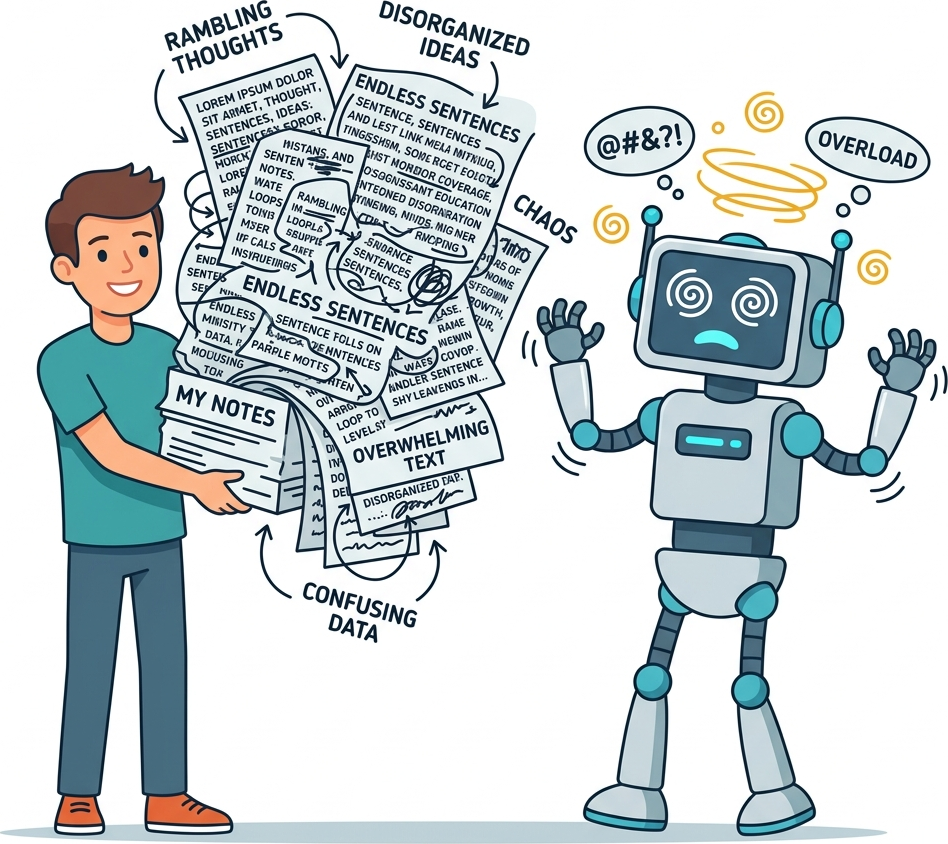
💡 Summary: To get great answers, be clear, specific, provide context, and tell the AI exactly how to format its reply. Avoid giving it massive, unstructured walls of text.
📌 Deep Dive: Understanding This Concept
As Generative AI systems become more complex, mastering the underlying principles of This Concept is essential for developers. Proper implementation in this area ensures that your AI applications remain scalable, performant, and secure when deployed to production environments.