📌 Proprietary vs. Open-Source
The first major decision when building an AI application is choosing between a Proprietary (closed) model and an Open-Source (open-weights) model.
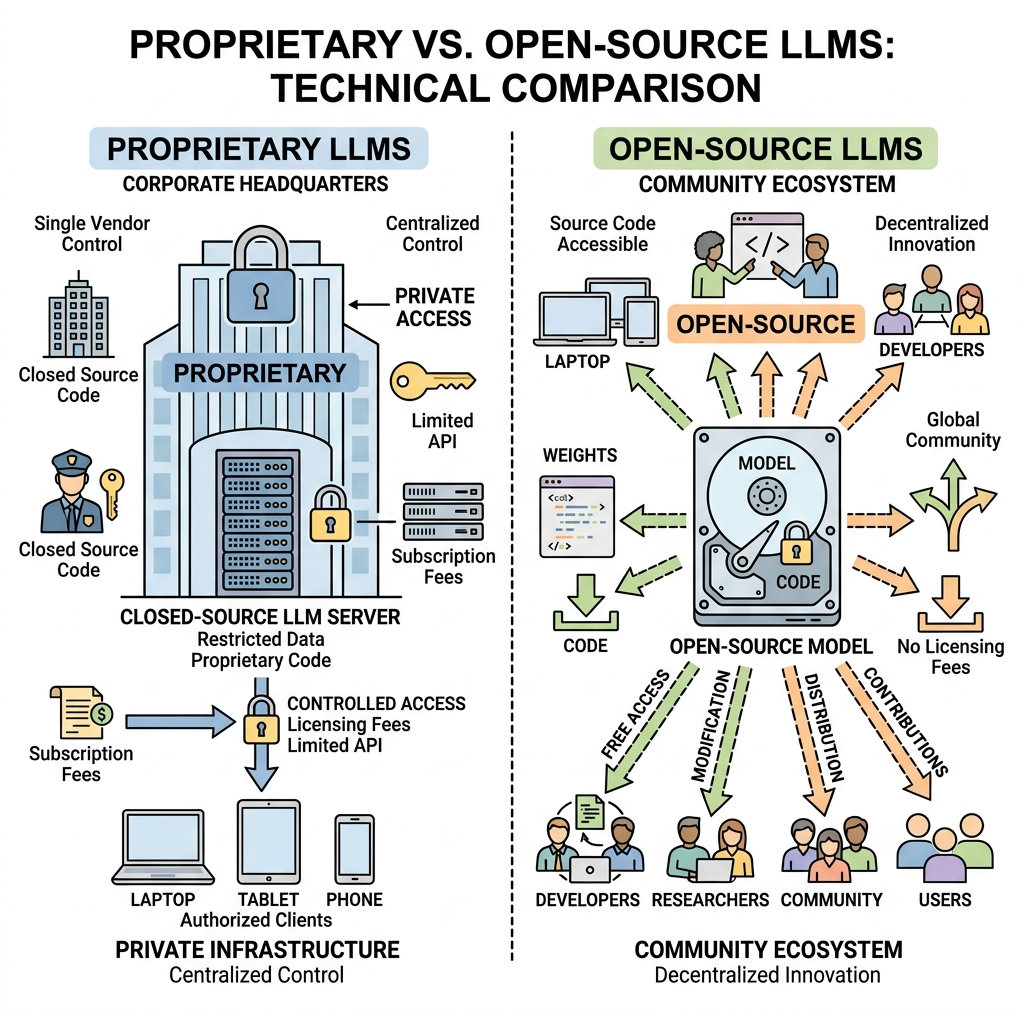
- Proprietary Models (e.g., GPT-4, Claude 3): These are hosted behind an API by major tech companies. You don't have access to the underlying code or weights. Pros: Extremely high performance, no infrastructure to manage. Cons: You pay per token, and your private data is sent to their servers.
- Open-Source Models (e.g., Llama 3, Mistral): You can download the model weights for free and run them on your own hardware. Pros: Complete data privacy (works offline), no per-token API costs. Cons: You must pay for and manage the massive GPU servers required to run them.
📌 Parameter Sizes: 8B vs 70B+
Models come in different sizes, measured in Billions of Parameters (e.g., 8B, 70B, 400B). A parameter is essentially a mathematical "connection" in the model's brain.
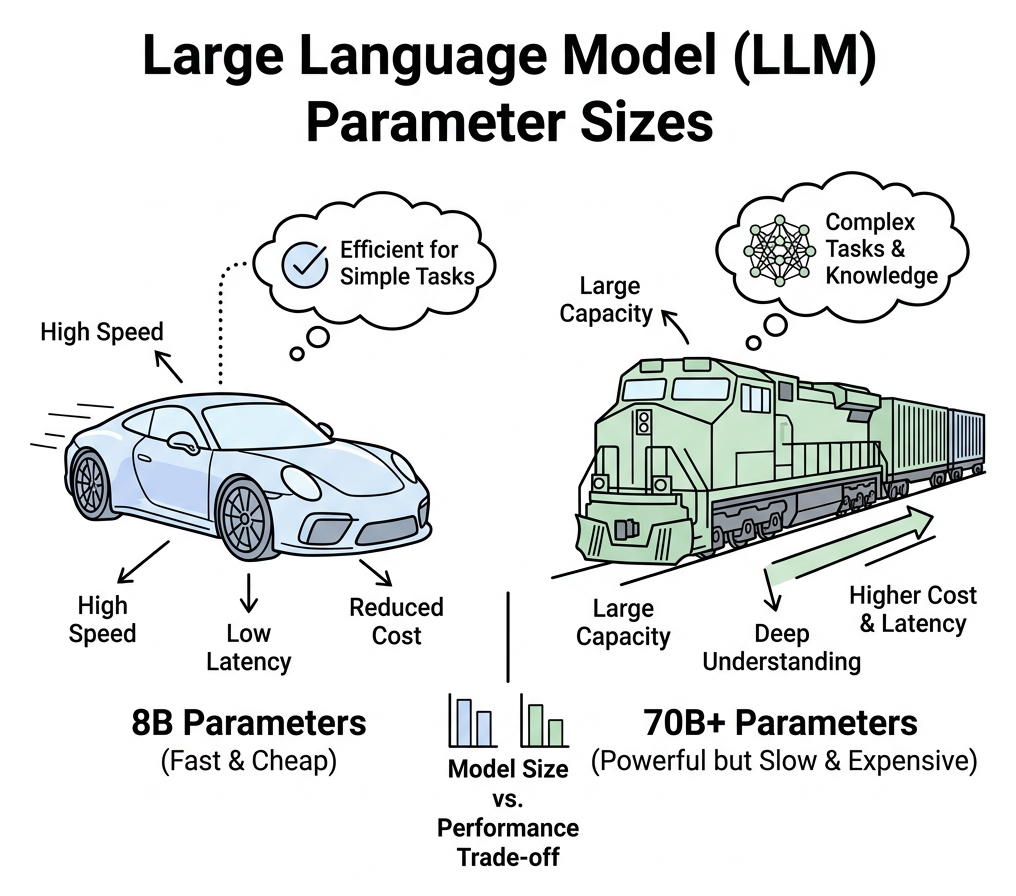
- Small Models (e.g., 8B): Think of them like sports cars. They are incredibly fast, very cheap to run, and can even run on a standard laptop. They are perfect for straightforward tasks like summarizing text or extracting data.
- Large Models (e.g., 70B+): Think of them like heavy freight trains. They require massive data centers to run, are slower, and cost much more. However, they are required for complex reasoning, advanced coding, and highly nuanced problem-solving.
📌 How to Compare Models: Chatbot Arena
With hundreds of models releasing every month, how do we know which one is actually the best? Traditional static benchmarks (like taking a standardized test) are flawed because models memorize the test data during training.
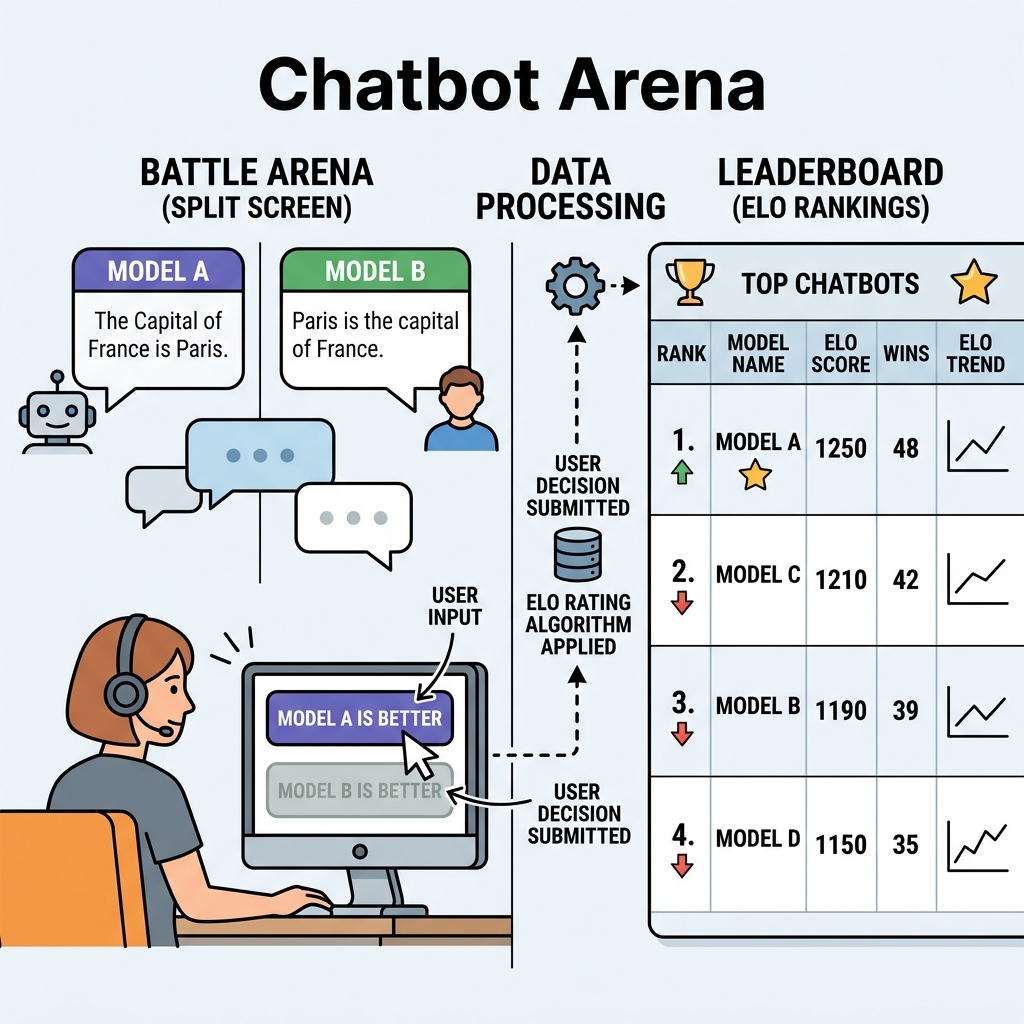
The industry gold standard is the LMSYS Chatbot Arena. It uses crowdsourced, blind A/B testing. A user types a prompt, and two anonymous models generate responses side-by-side. The human picks the best answer, and an Elo rating system (like in chess) updates the global leaderboard. This proves which model humans actually prefer in real-world conversation.
Quick Knowledge Check
Test what you just learned about AI Models
Question 1 of 1
What is the primary advantage of using an Open-Source model over a Proprietary API model?
Loading results...