Understanding how JavaScript manages execution is key to mastering asynchronous behavior and performance. Two core concepts help explain this: the Call Stack and the Event Loop.
The Call Stack
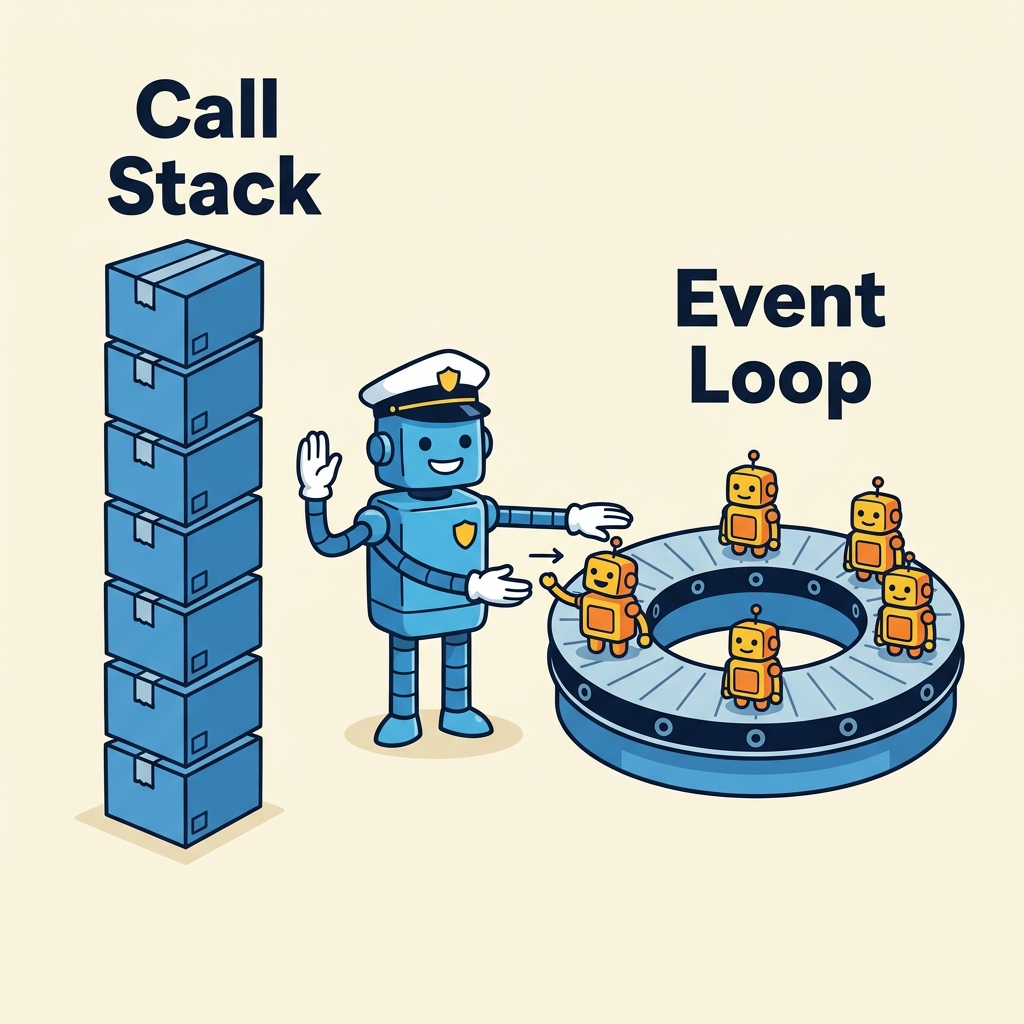
The call stack is a data structure that keeps track of function calls in your code. It follows a Last In, First Out (LIFO) principle:
- When a function is called, it’s added (pushed) onto the stack.
- When a function returns, it’s removed (popped) from the stack.
This means only one function executes at a time, making JavaScript single-threaded.
💡 Call Stack Key Point
If a function calls another function, the new function is pushed on top, and the previous one waits until the new one finishes.
Example of Call Stack Behavior
📌 Deep Dive: Simple Function Calls
function first() {
  second();
  console.log('First done');
}

function second() {
  console.log('Second done');
}

first();The Event Loop
JavaScript executes synchronously but supports asynchronous operations via the event loop. The event loop enables non-blocking behavior by managing the execution of asynchronous callbacks.
Here’s how it works in brief:
- The call stack runs functions synchronously.
- Asynchronous events (like timers, HTTP requests) place their callbacks into the callback queue once ready.
- The event loop constantly checks if the call stack is empty.
- When the stack is empty, the event loop pushes the next callback from the queue onto the call stack for execution.
💡 Event Loop Insight
Even if an asynchronous callback is ready, it waits in the queue until the call stack is empty.
| Call Stack | Callback Queue |
|---|---|
| Synchronous function calls | Asynchronous callbacks waiting to run |
| Executes one function at a time | Holds callbacks until the stack is free |
| Last In, First Out (LIFO) | First In, First Out (FIFO) |
Example: setTimeout and the Event Loop
📌 Deep Dive: Asynchronous Callback Execution
console.log('Start');

setTimeout(() => {
  console.log('Timeout callback');
}, 0);

console.log('End');Even with a zero delay, the setTimeout callback runs after all synchronous code because it goes to the callback queue first.
⚠️ Common Misconception
setTimeout with 0ms delay does NOT run immediately after the delay but waits until the current call stack is empty.
Summary
- Call Stack: Manages synchronous function execution, one at a time.
- Event Loop: Bridges asynchronous events by moving ready callbacks from the queue to the stack.
- This model allows JavaScript to handle asynchronous code without blocking.
Quick Knowledge Check
Test what you just learned
Question 1 of 2
What happens when a function is called in JavaScript?
Question 2 of 2
When does the event loop move a callback from the queue to the call stack?
Loading results...