Python is a powerful, high-level programming language known for its simplicity, readability, and versatility. Created by Guido van Rossum and first released in 1991, Python has grown to become one of the most popular languages in the world due to its clean syntax and broad range of applications. It is designed to be easy to learn for beginners while still being robust enough for experts to build complex applications.
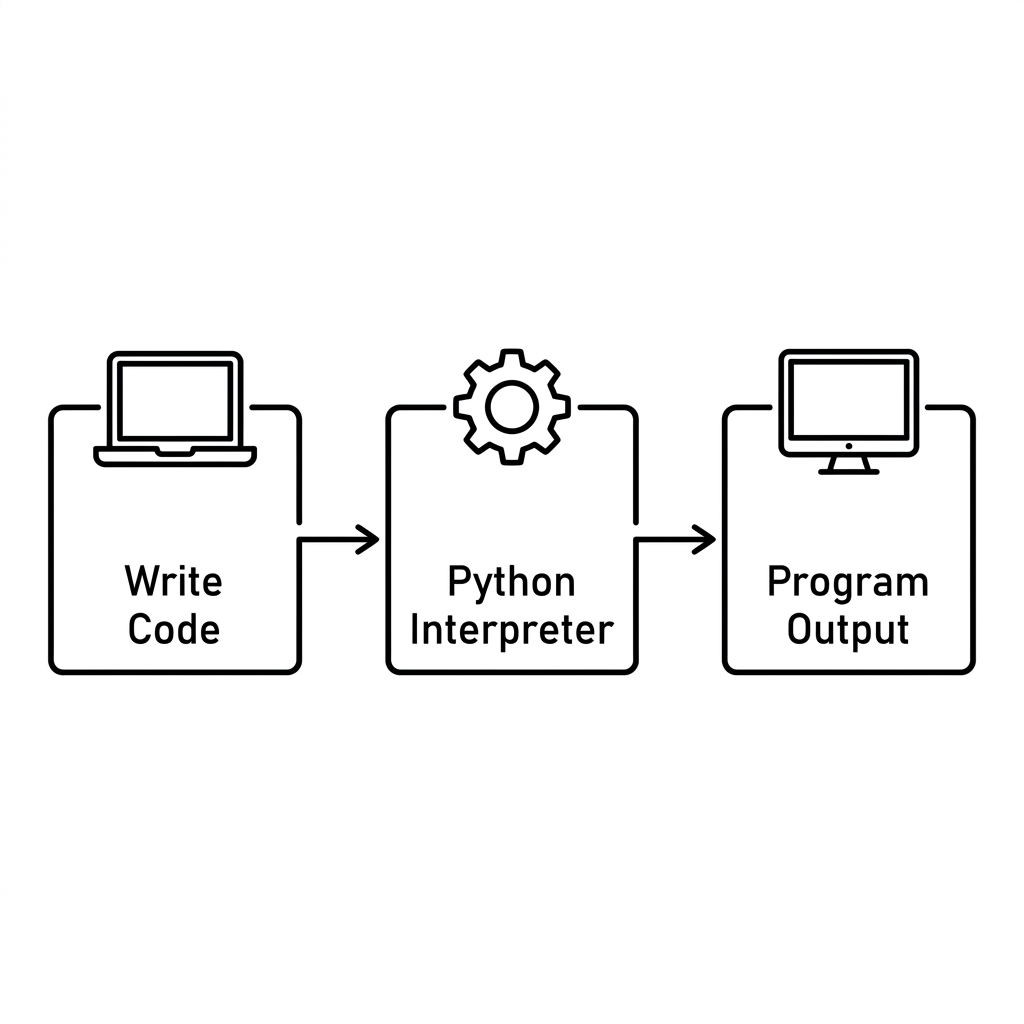
At its core, Python is an interpreted language, meaning that Python code is executed line-by-line by an interpreter, rather than being compiled into machine code before execution. This feature makes development faster and debugging easier. Python supports multiple programming paradigms, including procedural, object-oriented, and functional programming, allowing developers to choose the best approach for their projects.
One of Python's greatest strengths is its extensive standard library and a vast ecosystem of third-party packages. These tools cover everything from web development and data analysis to artificial intelligence and automation, making Python highly adaptable to numerous fields and industries.
In this lesson, we will explore what Python is, why it is so widely used, and how it fits into the landscape of modern software development.
💡 A Simple Analogy: Python as a Swiss Army Knife
Think of Python as a Swiss Army knife in the world of programming languages. Just like a Swiss Army knife has many tools for different tasks—scissors, knife, screwdriver—Python offers a wide range of features and libraries that allow you to tackle various programming challenges with ease. Whether you want to cut through data, screw together a web app, or open a bottle of automation, Python has the right tool for the job.
🛠️ Real-World Use Case: Web Development with Django
Python powers many popular web frameworks, one of the most notable being Django. Django allows developers to build secure, scalable, and maintainable web applications quickly. For example, Instagram, a massive social media platform, uses Django on its backend to handle millions of users. This demonstrates Python’s capability to support large-scale, high-performance applications.
⚠️ Common Pitfall: Confusing Python with Other Languages
Because Python is often recommended as a first programming language, beginners sometimes confuse its simplicity with it being 'less powerful' than other languages like C++ or Java. In reality, Python’s design focuses on developer productivity and code readability, not sacrificing power. It integrates well with other languages and tools, and is widely used in professional environments.
Python’s Syntax and Readability Python uses clear and straightforward syntax, often resembling English. It avoids complex symbols and punctuation, which makes it easier to understand and write code quickly.
Interpreted Language Unlike compiled languages that translate code into machine language before running, Python executes code directly, line-by-line. This allows for faster development cycles and easier debugging.
Extensive Standard Library Python comes with a rich set of modules and functions out of the box, enabling tasks like working with files, networking, and data manipulation without needing external packages.
Cross-Platform Compatibility Python runs on Windows, macOS, Linux, and many other operating systems, making your code portable across different environments.
Community and Ecosystem Python has a vast, active community that continuously contributes libraries, frameworks, and tools, ensuring it stays up-to-date with modern technology trends.
📌 Deep Dive: A Simple Python Program
# This program prints a friendly greeting to the user.
# Notice how the syntax is simple and readable.

def greet(name):
    """Function to greet a person by name."""
    print(f"Hello, {name}! Welcome to Python programming.")

# Calling the function with the name 'Alice'
greet("Alice")
Quick Knowledge Check
Test what you just learned
Question 1 of 2
What is a key feature of Python that makes it beginner-friendly?
Question 2 of 2
Which of these is NOT a common use case for Python?
Loading results...